In a year when the world had forgotten the meaning of “shared sky,”Piero stood before an old lighthouse, feeling the very threads of civilisation unraveling.
War drums thundered across empty halls; kindness had become myth.
A message pinged on his phone: “The Island of Reason exists—more than a stone fortress, it is a guiding light for the soul.”
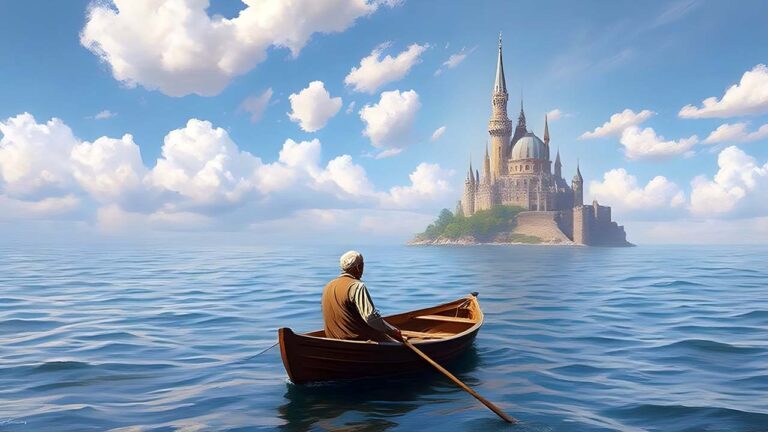
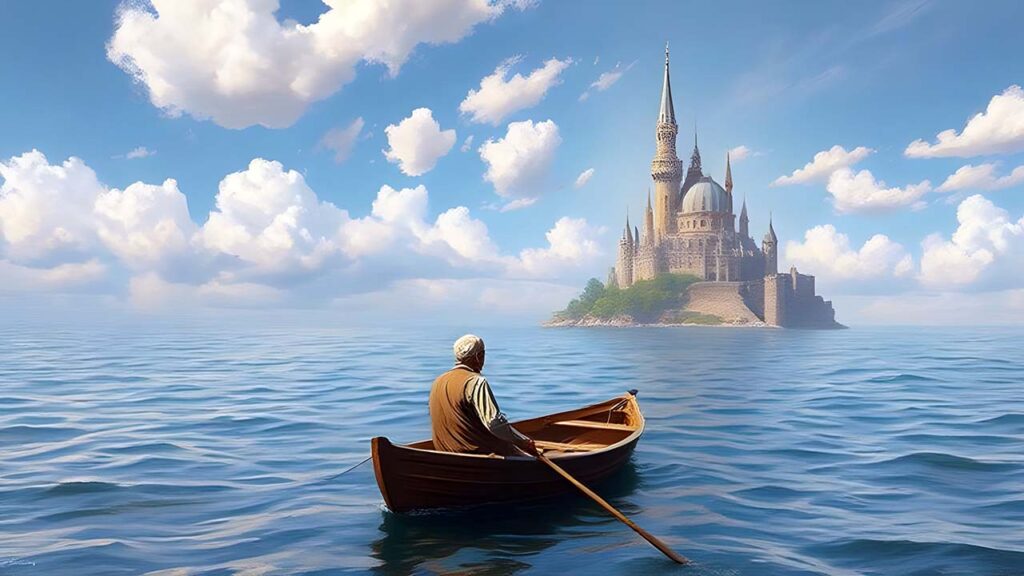
He set out on his weather‑worn boat, clutching a tattered star map, and set sail.
The sea lay as still as a dream beneath cotton‑white clouds.
The first castle rose before him—a European spire whose stone walls glowed with hope.
“It must be here,” he thought.
But doubt crept in. Was reason hidden in authoritarian bastions, or did it live in the quiet meeting of two souls?
While he paddled past the castle’s spires, he remembered Socrates’ words: “I know that I know nothing.”
Truth was not a monument of stone but a question that echoed in the heart.
The sea—his silent companion—seemed to answer softly: “Reason is the river that pushes you forward, not the fortress that stops you.”
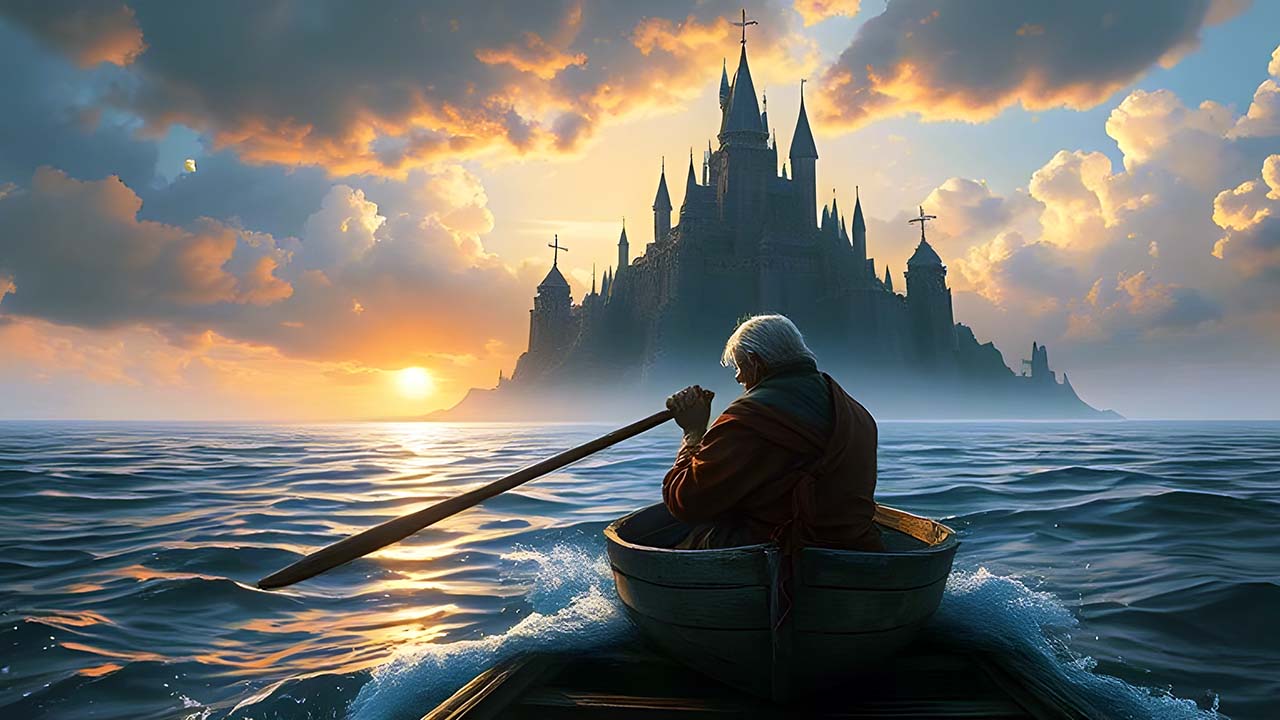
He continued. Above the horizon, the sky burned red as the sun sank.
A new island emerged, a Gothic isle of hundreds of spires.
Waves rolled against the hull; Piero’s oar felt heavy with doubt.
Was reason in those cold towers, or in a child’s tearful sharing of her last loaf of bread?
The waves urged him not in words, but in the rhythm of their crash against rocks.
When he paddled again, the castle’s shadow stretched out like a bridge, waiting for him to step across.
In the fading light he understood: Reason is not a known space but an unknown one; it is the courage to row when the path is unclear.
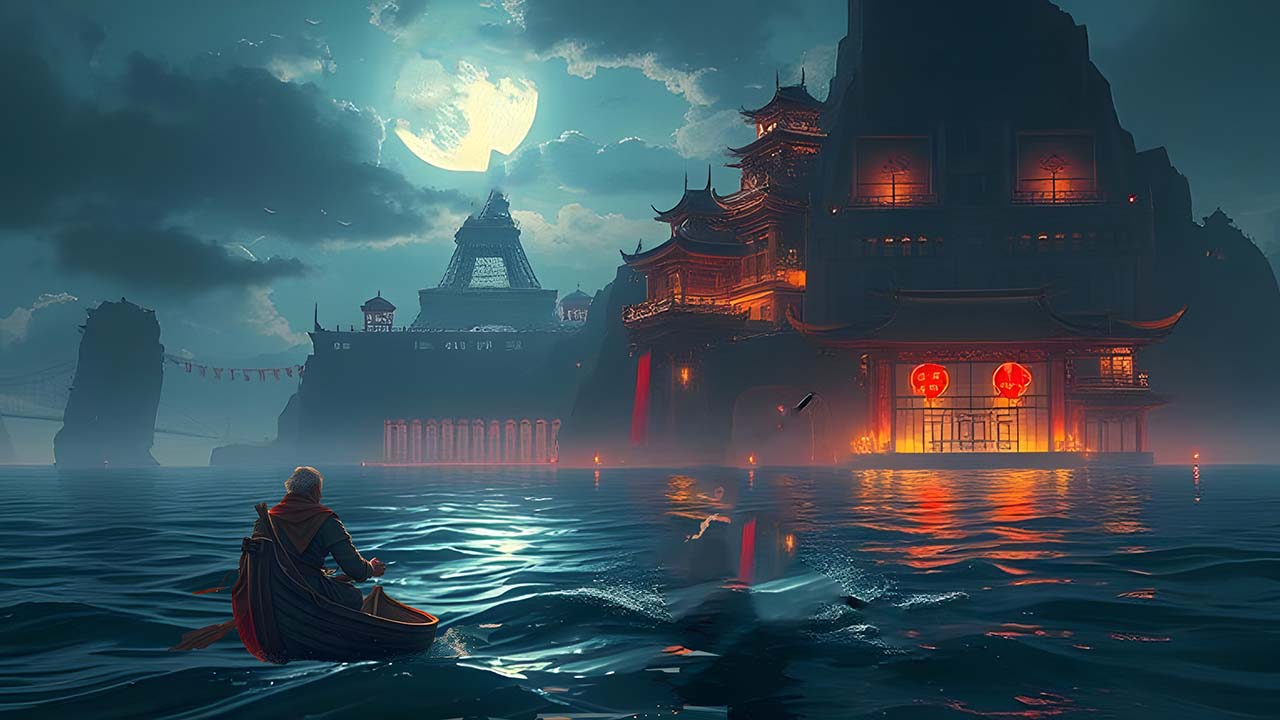
Later, under a moon hanging like a lantern, silver light shimmered on the water.
His boat passed a collage of culture— a Chinese pagoda lit with red lanterns, the slender silhouette of the Eiffel Tower, and a floating city that seemed to breathe.
A child’s tiny boat, similar to his but crowned with lanterns, drifted toward the horizon.
In that moment Piero grasped the truth: the Island of Reason was not a physical place.
It lived in every heart that chose to listen— in the Chinese scholar sharing knowledge with a French engineer, in the Japanese craftsman painting with an African storyteller.
The Eiffel Tower embodied innovation; the pagoda, ancient wisdom.
Together, they formed an eternal beacon of shared humanity.
He stopped paddling. The sea settled into calm.
Around him, others appeared—sailors, scholars, children—each on their own vessel.
The Island of Reason was not distant; it was in the shared rhythm of oars, in the stories exchanged across the waves.
Hope was not a destination but a collective journey.
When the stars glittered, countless lights shimmered—each a promise that reason endures in the uncharted exploration of the soul.
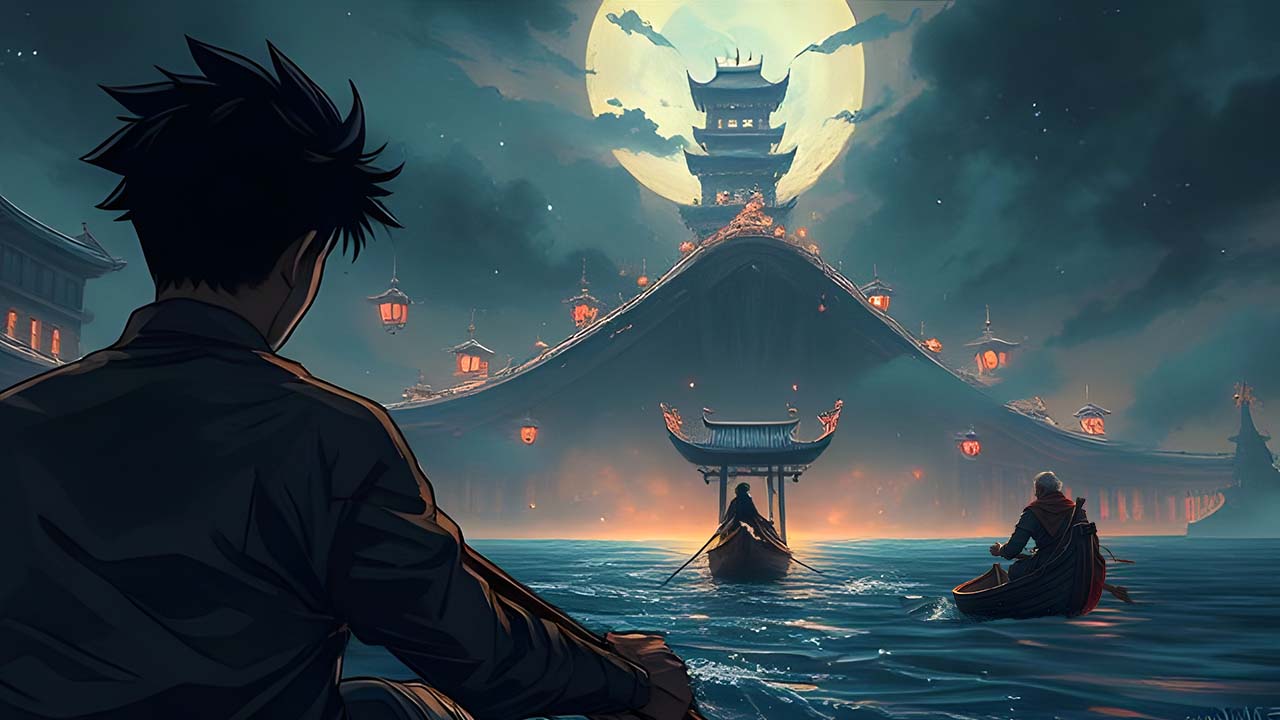
Piero smiled as his oar moved once more. The Island of Reason had never vanished; it has always been here, waiting for us to choose, to row toward it.
The sea began to sing, and in that song the world, for a moment, remembered how to breathe.
He woke with a book slipping from his hands.
He had once been a scholar in the Library of Alexandria, and this dream was perhaps a cry from the very heart of his cognition.
(LKW Original)
console.log(’28du3′);