When Sophie received the notification email informing her that she had been replaced by VIVA, her world did not collapse in blazing fury. Instead, the steady light she had nurtured for years faded away in total silence.
VIVA — short for Virtual Integrated Venue Assistant — was a cloud platform quietly embedded into the company’s daily operations. It could arrange schedules, negotiate with suppliers, and even generate personalized event invitations in mere seconds. The marketing team decided that since the improvement in efficiency far outweighed labor costs, VIVA would fully take over Sophie’s responsibilities. The HR manager delivered the news in a cold, procedural tone: a transfer was no longer possible, and the organization had decided to terminate her employment.
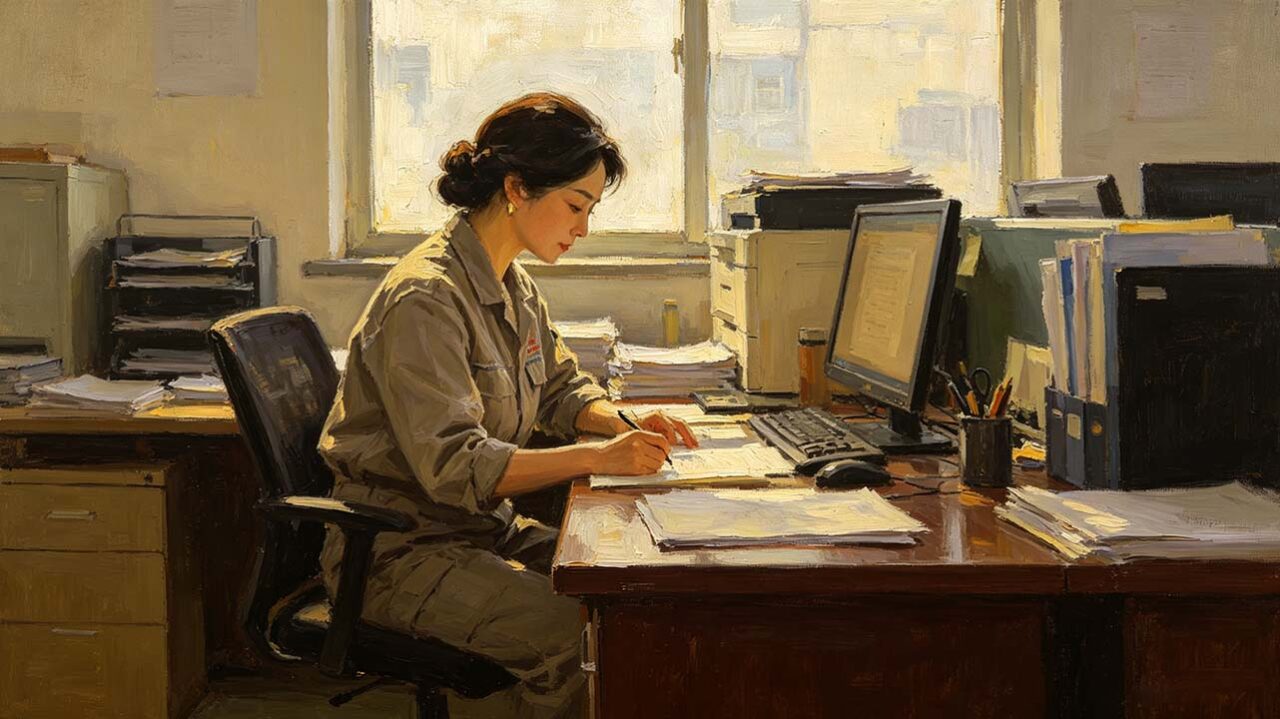
Sophie stared at the screen, the cursor blinking like a heartbeat — a heartbeat she had not truly felt in a long time. The next morning, she walked into the company lobby, yet could not remember why she had come. Her phone held a message from her mother, reminding her of their Sunday coffee date. That work email had become her only remaining link to who she once was.
Her days fell into a monotonous cycle, filled with silence and trivial routines: cooking, cleaning, and flipping through old photo albums tucked away in a box. She could no longer recall how effortlessly she had chatted with her first job interviewer as if they were old friends. She only remembered the hopeful sparkle in her own eyes, and the soft sunlight filtering through the office blinds.
“If I am no longer the one in charge of grand quarterly events, who am I really?” she whispered to herself, met only by an empty echo in her heart. She felt no anger, knowing the algorithm merely followed its programmed tasks. She felt no shame either, for she had not failed — she had simply been replaced by a faster, more efficient tool of the modern age.
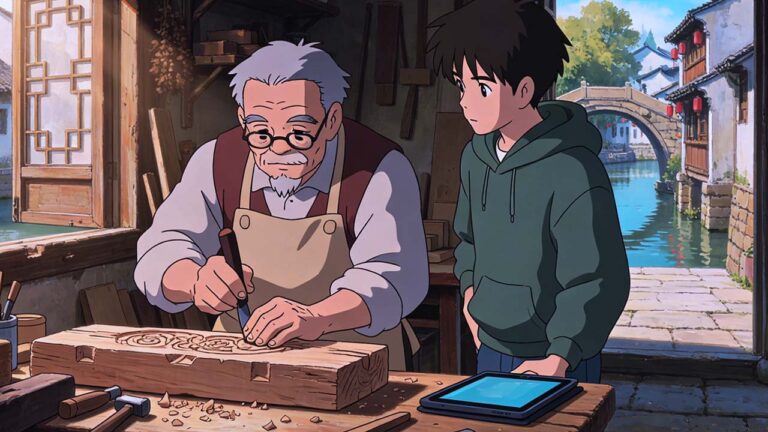
One evening, she wandered to the neighborhood community center, where the soft, sorrowful melody of a violin drifted out from a practice room. Elderly Mr. Carl sat playing his wooden violin, his fingers dancing gracefully across the strings.
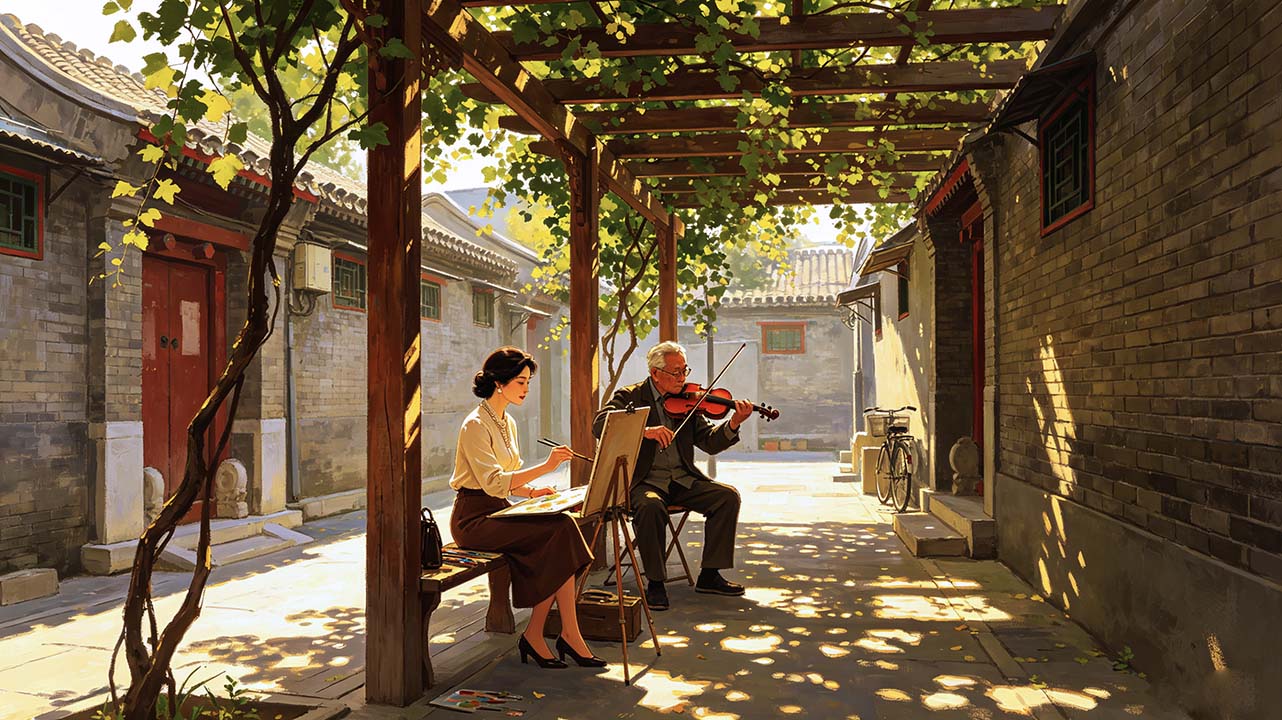
“New here?” Mr. Carl looked up with a gentle smile.
Sophie smiled awkwardly. “I… I’m not sure where I belong anymore.” She admitted she used to be an event planner, never imagining she would find herself lingering among artists and art lovers.
“Sometimes the most unexpected places lead us home,” Mr. Carl said softly.
The flowing melody seeped into Sophie’s lonely heart. She stepped toward the small stage and opened her sketchbook. Her fingers trembled, as if her long-suppressed emotions had finally found a voice. On the page, she traced the curve of Mr. Carl’s hands, the trembling strings, and the warm light resting on the wooden violin.
“Do not chase perfection,” Mr. Carl murmured. “What matters most is sincerity.”
That night, lying in bed beneath the dim ceiling light, Sophie still heard the lingering echo of the violin. She suddenly realized she had spent years arranging stories and moments for others, yet had forgotten to live her own life.
She signed up for painting classes at the community center, taught by the kind Ms. Maya. She learned color theory, composition, and perspective. At first, Sophie felt like an outsider among the group. Noticing her hesitation, the teacher asked her favorite color. Without hesitation, Sophie answered, “Green.” Soon she discovered an indescribable shade of green — the fresh, vivid hue of new leaves after rain, brimming with life.
When the class was assigned the theme *Moment of Resilience*, Sophie put her feelings onto canvas: a woman standing in a green field holding a violin, with a city skyline fading softly into the background light, symbolizing her lost corporate career. Through this painting, she told her own story of job loss, confusion, and quiet rebirth.
When her friends viewed the artwork, Mr. Carl was deeply moved. “This painting is beautiful. I never knew you could capture such raw emotion.”
In that moment, Sophie understood her worth was never limited to planning schedules and organizing venues. She too could tell stories and touch hearts through art.
Soon afterward, the community center board planned a charity gala and needed a large art installation. Sophie volunteered to create a mural for the venue. Her work captivated every guest. After the gala, the board extended a sincere invitation: they wanted her to become their **Event Artist**, crafting immersive experiences blending art and music.
“Event Artist” was an entirely new role. Sophie merged her years of event planning experience with artistic creation, designing one-of-a-kind immersive experiences unlike any traditional event. She created art installations for weddings, corporate functions, and community festivals, inviting audiences to step inside and feel the moment.
One day on social media, Sophie saw a post from someone sinking into depression after being replaced by AI. She decided to start a *Restart Group*, sharing her own journey and teaching painting to help lost souls explore and rediscover themselves.
Before long, a startup integrating AI and creative industries reached out to hire her as a consultant. Drawing from her own experience, Sophie explained calmly: algorithms can replace repetitive work, but they can never replicate human emotion, empathy, and creative inspiration.
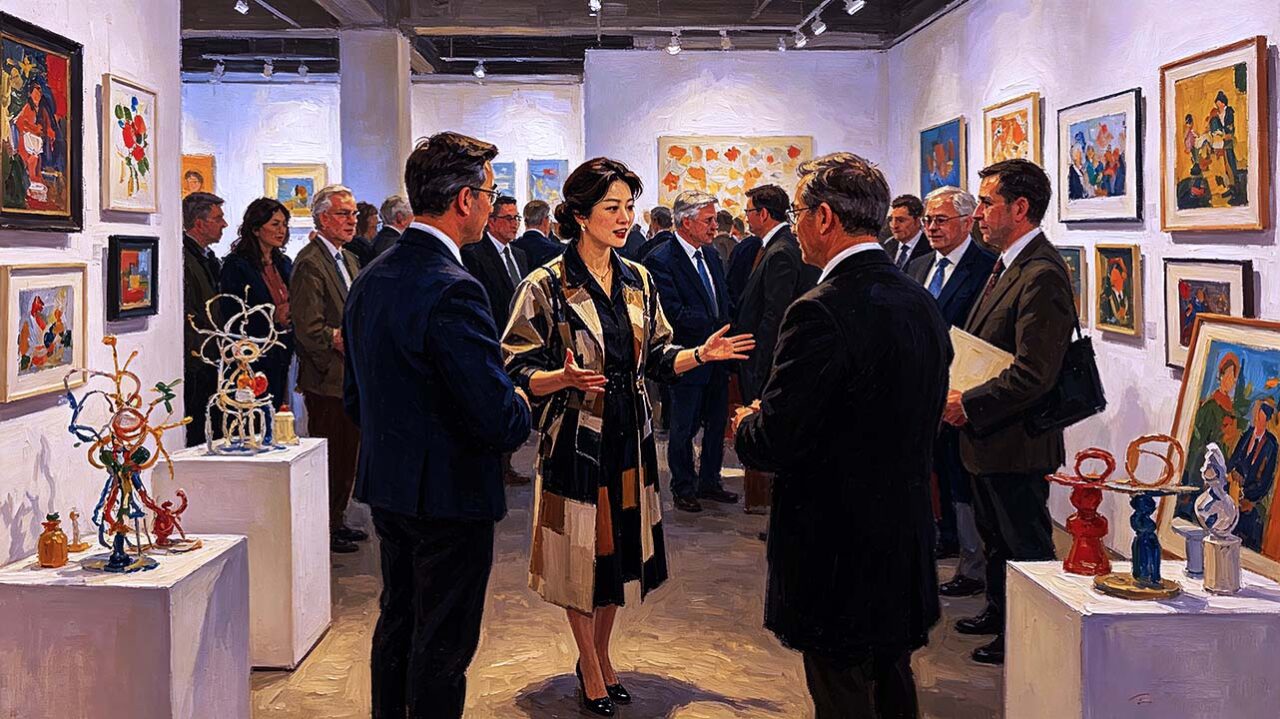
Years later, Sophie had become a renowned creator in the field of immersive experiences. She often thought back to that cold dismissal email. It had once left her frozen in despair, yet it also carved open an entirely new path for her life.
Standing before a blank new canvas, Sophie gripped her paintbrush, blending shades she had never dared use before. She finally understood life has no true dead ends. Sudden loss and forced goodbyes are merely blank spaces destiny leaves for us — a chance to pick up the brush again and paint a life truly our own.
Under soft warm light, her brush touched the canvas gently. Her second stroke was destined to be a new beginning.
Now Sophie no longer defined herself by job titles or social labels. She let go of regrets over her past identity and stopped living under the expectations of others. In her free time, she would sit quietly on the community promenade, painting peacefully while Mr. Carl played the violin. The wind brushed her hair, and her eyes sparkled once again with the pure brightness she had in her younger days. She accepted her past struggles and cherished her new free, blooming life. At last, she understood: one should never be confined by a single job or identity. Strip away external praise and titles, stay true to your heart and passion, and live unapologetically as yourself — that is life’s greatest fulfillment. From then on, she lived only for herself and her art. Between brushstrokes, colors, and light, she had firmly grasped the initiative of her own life.