Deep in the misty mist of the Jiangnan region of China lies a quiet ancient town. Winding bluestone paths meander past old riverside houses, where time slows down gently.
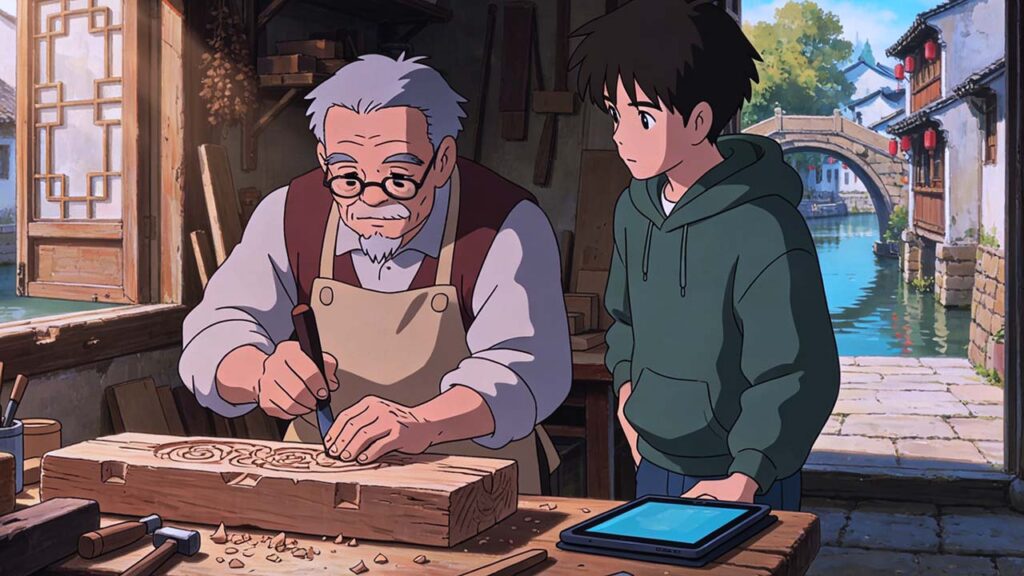
In this town lives an elderly carpenter, Uncle Lu. He has spent his whole life with wood, guarding an old craft that is slowly fading away with time. Uninterested in new trends or fleeting fame, he sits quietly in his old wooden workshop all day, mending worn carved furniture. With every cut and chisel, he works slowly and carefully—carving the grain of the wood, preserving the warmth of the years.
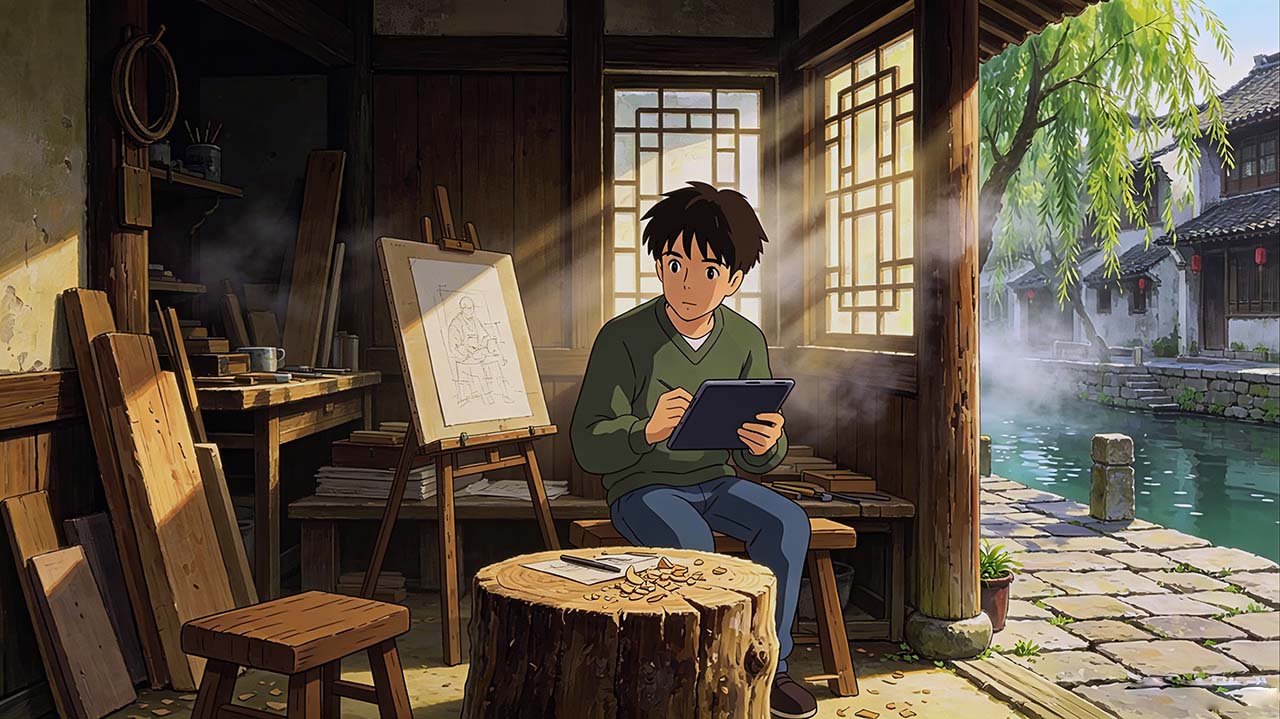
Young artist Liu lives in a different world of digital codes and algorithms. Instead of carving tools, his fingers touch cold screens, surrounded by endless lines of data. In the age of AI painting, he often feels lost. Artificial intelligence can mimic any artistic style in an instant, copying famous masterpieces or sketching landscapes in mere seconds. One day he asked Uncle Lu:
“Sir, AI can imitate any style and finish a painting in the blink of an eye. Is there still any need for us to paint by hand, stroke by stroke?”
Holding his worn wooden ruler, Uncle Lu smiled softly and shook his head.
“Art is the living journey of the human soul. Tools are only walking sticks along the way; the true treasure lies in the journey of creation. A machine can copy appearances, but it cannot feel the mood behind every brushstroke. It cannot touch the warmth of creation, nor understand true feeling and value.”
At that time, Liu could not yet understand the depth of Uncle Lu”s words. He came across a strange online artwork called *Headless Flamingo*. Using AI, he regenerated and redesigned the image. The finished piece was bright in color and innovative in composition,a flamingo floating in the air without a head. Though exquisite in appearance, it carried cold emptiness, with no soul and no emotion.
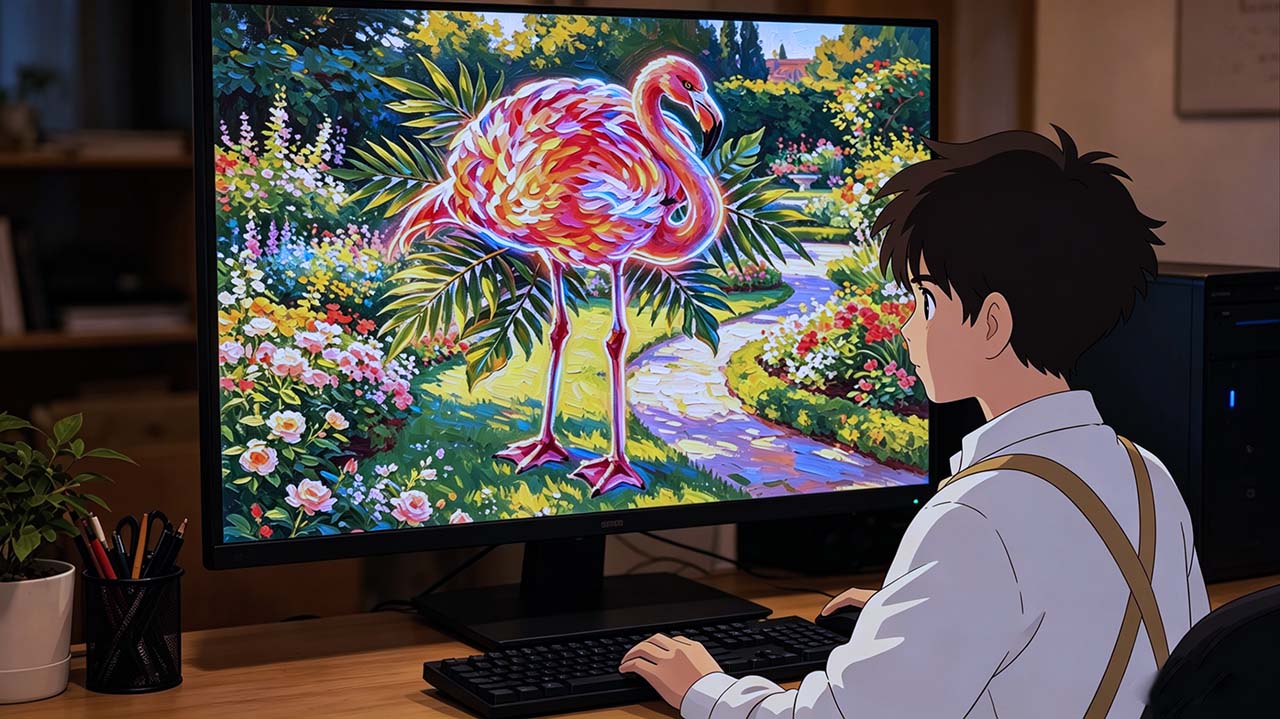
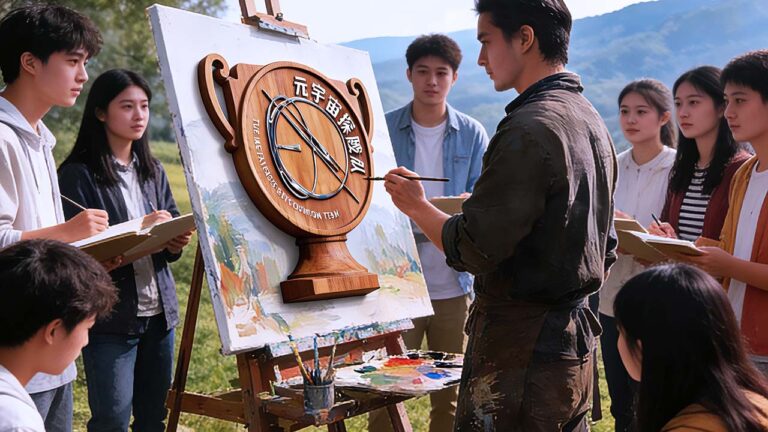
On a whim, he entered this AI artwork into a competition, and surprisingly won third place. Back in town, he posted the painting in the shop window of the old wooden house. Beside it stood a hand-carved wooden plaque made by Uncle Lu, engraved with four simple words: “Light and Shadow of the Human Heart”. Tourists stopped to gaze in silence. They saw the gorgeous coldness of machine art beside the simple warmth of handmade craft, while the wind whispered softly past the eaves.
Late one night, Liu sat alone in the wooden chair, filled with confusion and emptiness. The joy of winning the award faded quickly, leaving only a hollow thought: Can a work created without sincere effort truly be called art?
Uncle Lu walked slowly to Liu’s side and handed him a wooden brush he had polished himself.
“Do not hand over the light in your heart to machines. Let light and shadow first rest in your palms, and let your heart melt into every stroke.”
His words awakened the lost young artist.
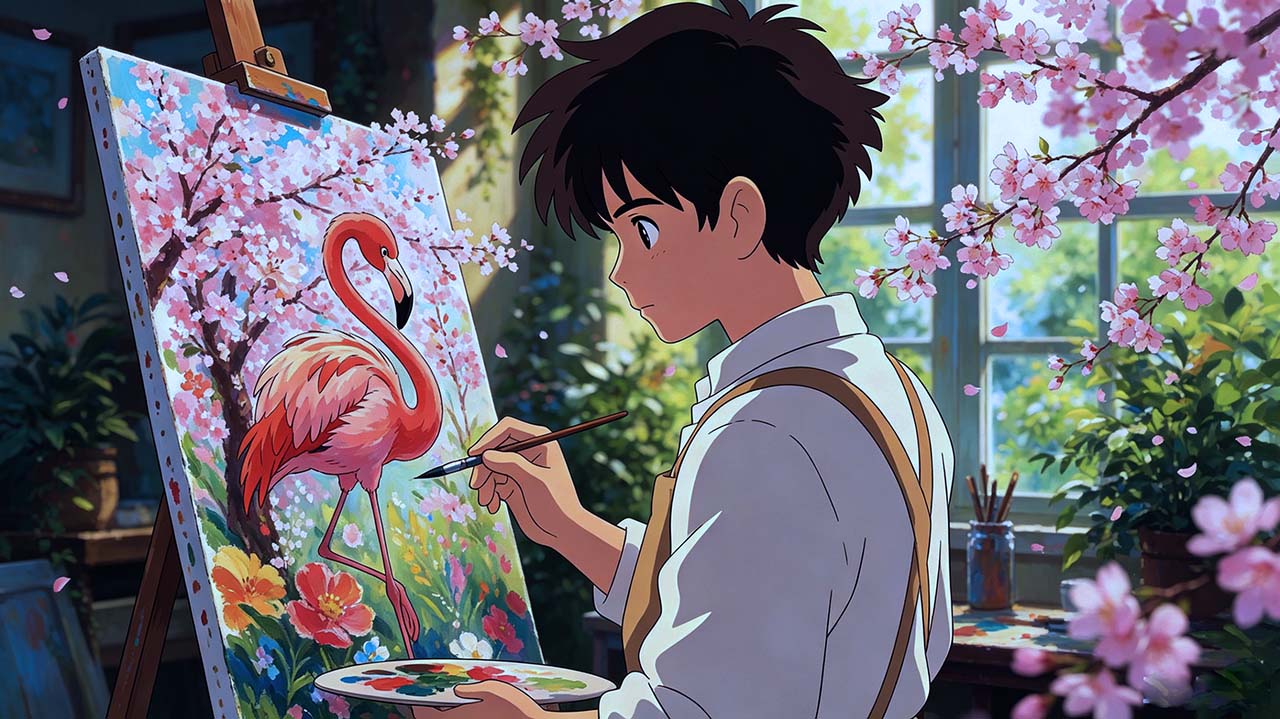
From that day on, Liu no longer relied on AI algorithms. He picked up wooden brushes, charcoal sticks, and paint, returning to the pure heart of hand creation. He took apart the cold lines generated by the machine, redrawing every stroke and shading with care. He wove ordinary life memories, inner joys and sorrows, imagination of mountains and rivers, all his deepest feelings, into every line of his work.
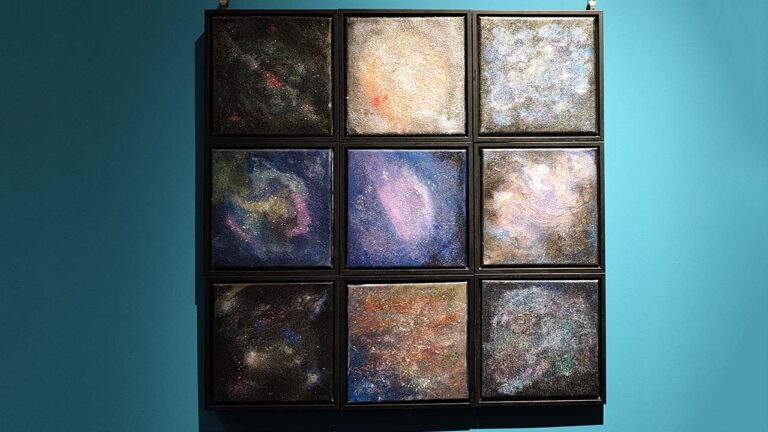
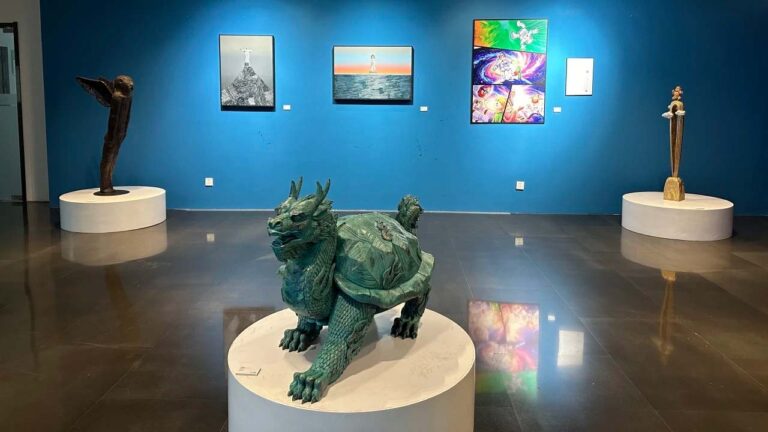
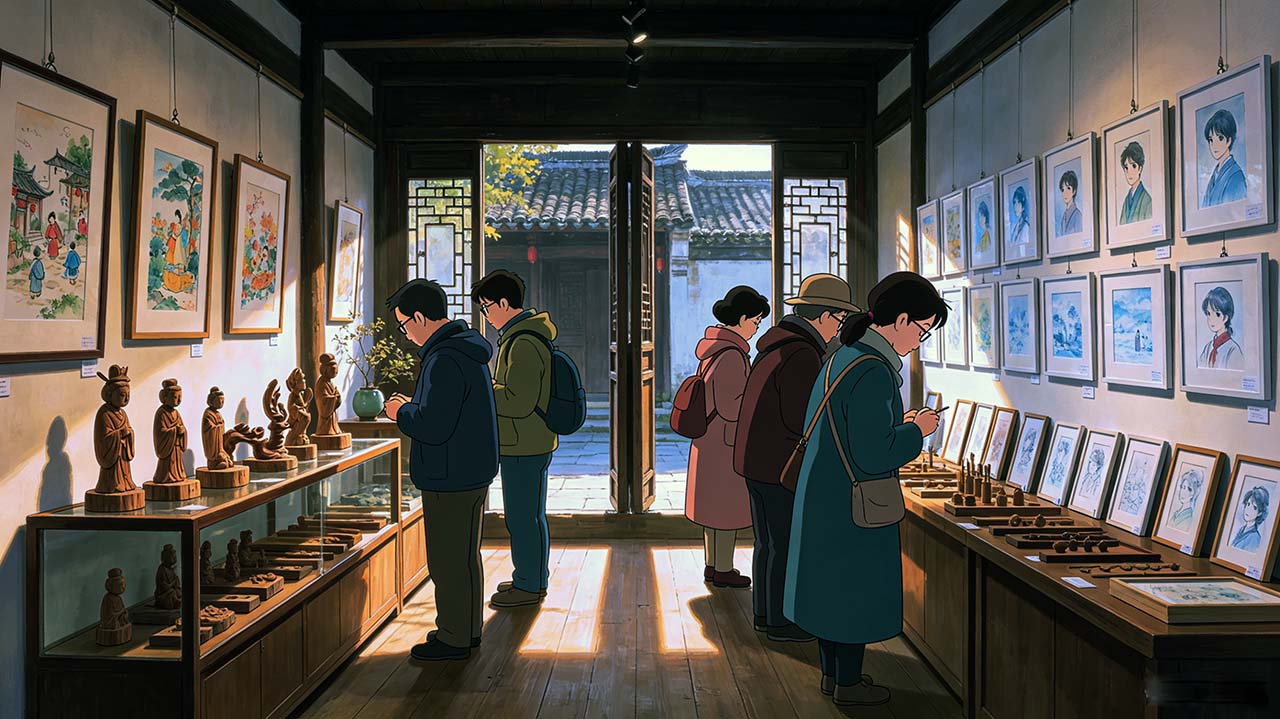
Weeks later, the ancient town held a special art exhibition called “Dance Between Human and AI”. Inside the gallery, one side displayed hand-painted art and wood carvings, warm, lively, and filled with the warmth of human life. The other side showed AI-generated paintings, neat and perfect yet distant and cold.
Visitors wandered slowly. They always paused first before the handmade works, quietly listening to the stories behind each stroke and feeling the creator’s breath and mood hidden in the art. Then they turned to the AI paintings, marveling at the speed and magic of technology, yet never truly touched inside.
At the closing of the exhibition, Liu stood at the door of the wooden house and shared his thoughts with the crowd:
“AI can copy skills and chase speed, but it can never touch the human heart. Handmade creation may be slow and simple, yet it weaves true feelings and thoughts into every piece of art, resonating with viewers across time.”
As his words fell, the night wind brushed through the leaves with a soft rustle, like the gentlest reply from nature. The whole ancient town was wrapped in the warmth of humanity, glowing with new life.
Later, Liu got invited with his hand-painted works to schools outside the town. He told the children: Art is never a race to finish faster or look more alike. Creation itself is a journey of talking with yourself, meeting all living things, and embracing time.
Uncle Lu also let go of his loneliness. He no longer saw wood carving as an abandoned craft of the past. Instead, he began teaching local children how to carve wood. He told them gently: Every piece of wood has its own spirit; just like every human heart, it deserves to be discovered with care and respected with tenderness.
In life and art, the process itself is the true value.
Art is never just a finished painting or a carved work. It is the quiet reflection, growth, and emotion along the way. AI can imitate techniques and copy forms, but it can never replicate human life experience, deep feelings, and the unique warmth of heartfelt resonance.
Technology is never the opposite of humanity; it is only a tool in our hands, not the final destination. True beauty always comes from humans dancing gently with technology, taking innovation as our wings and the human heart as our root.
As AI sweeps across our modern world, we must remember: The most touching art is never mass-produced by machines. It comes from a sincere pair of hands, a passionate soul, and stories woven stroke by stroke into unique, irreplaceable beauty that belongs only to humanity.