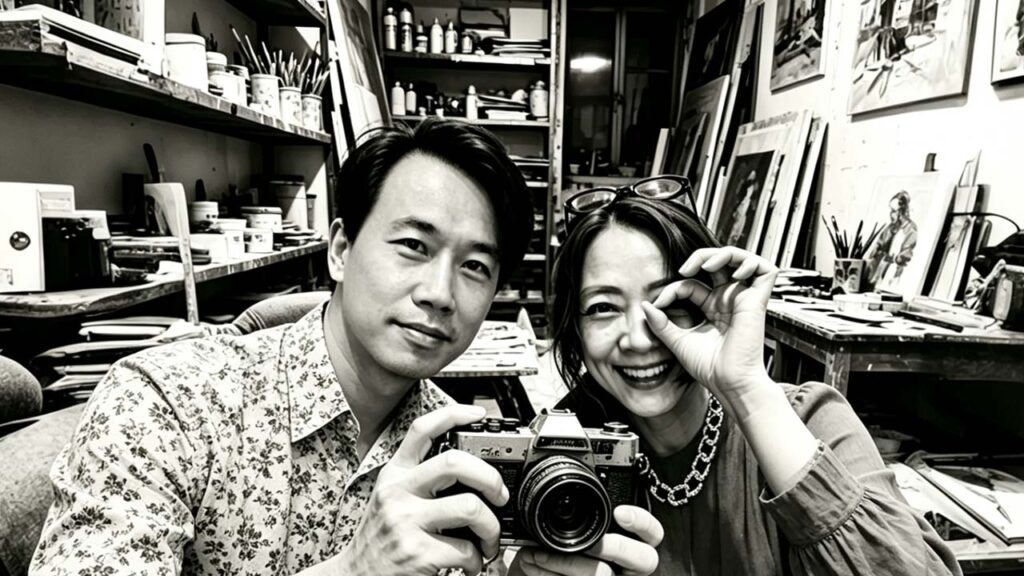
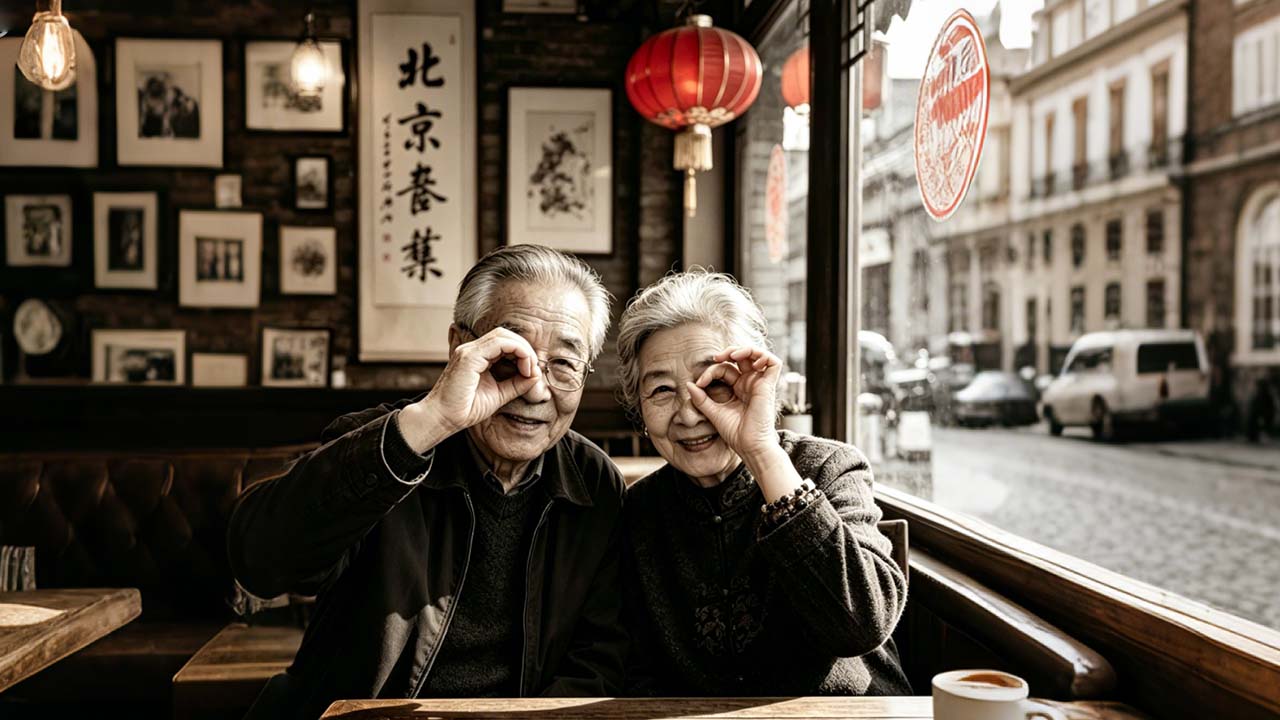
The café buzzed with the clatter of keyboards and clinking coffee cups, but Kuan and Nana paid no heed. They cupped their hands into the shape of a monocular telescope, their eyes sparkling with the same curiosity that had burned bright between them for decades.
Their story began in a tiny studio in New York City. Back then, Kuan, a young photographer, handed a well-worn film camera to Nana and said, “Don’t just look—*truly see*.” She laughed, forming a viewfinder with her hands and focusing it on him, as if he were a precious scene worth capturing. This simple gesture soon became their secret code. They spent countless nights developing photos in the darkroom, and rainy days sketching along the Hudson River. Time and again, they used this hand shape to make a promise: never to judge things only by their surface.
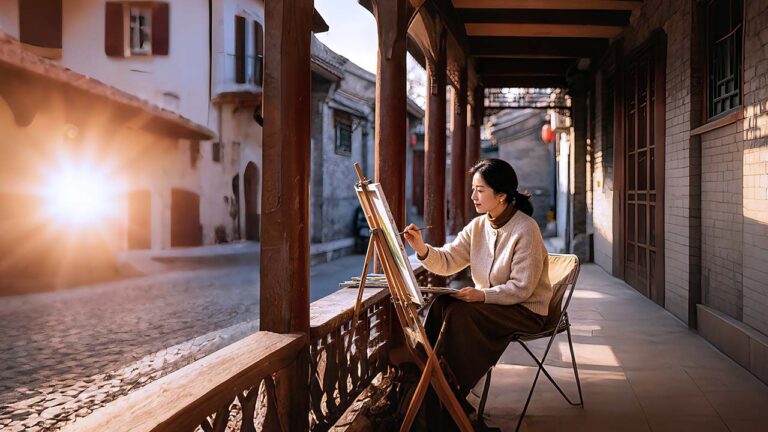
Decades slipped by. Streaks of silver threaded through Kuan’s hair, and Nana’s hands bore faint marks left by paintbrushes. Yet their special gesture never changed. To the café staff wiping tables, it was just two old friends fooling around. But to them, it was a zoomable lens that cut through the noise of the present, revealing the distant dreams they still yearned to chase.
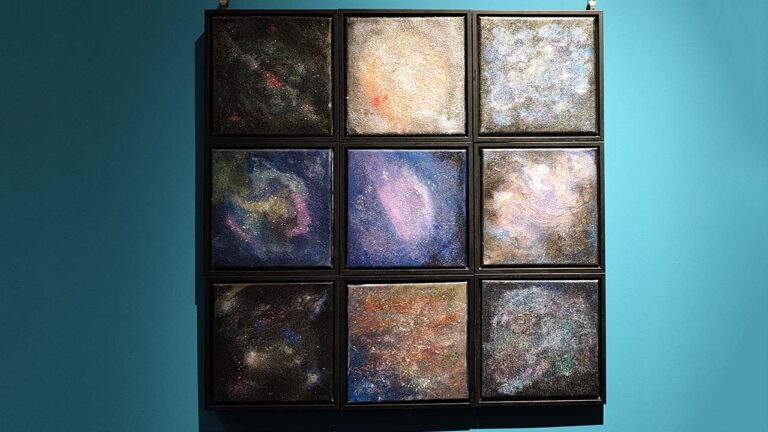
They called this their “remote viewing” gesture. It was no mystical trick from books, but an intimate bond shared only between them. In their early years, short on money and connections, they used this handmade lens to picture their first solo art exhibition in Manhattan. Gazing at the empty gallery space through their cupped hands, they could already envision crowds pouring in, and spotlights illuminating their photos of city streets and paintings of ordinary urban life. Later, they used the same gesture to imagine murals decorating community walls, and pictured their future daughter chasing fireflies in a backyard they had not yet owned.
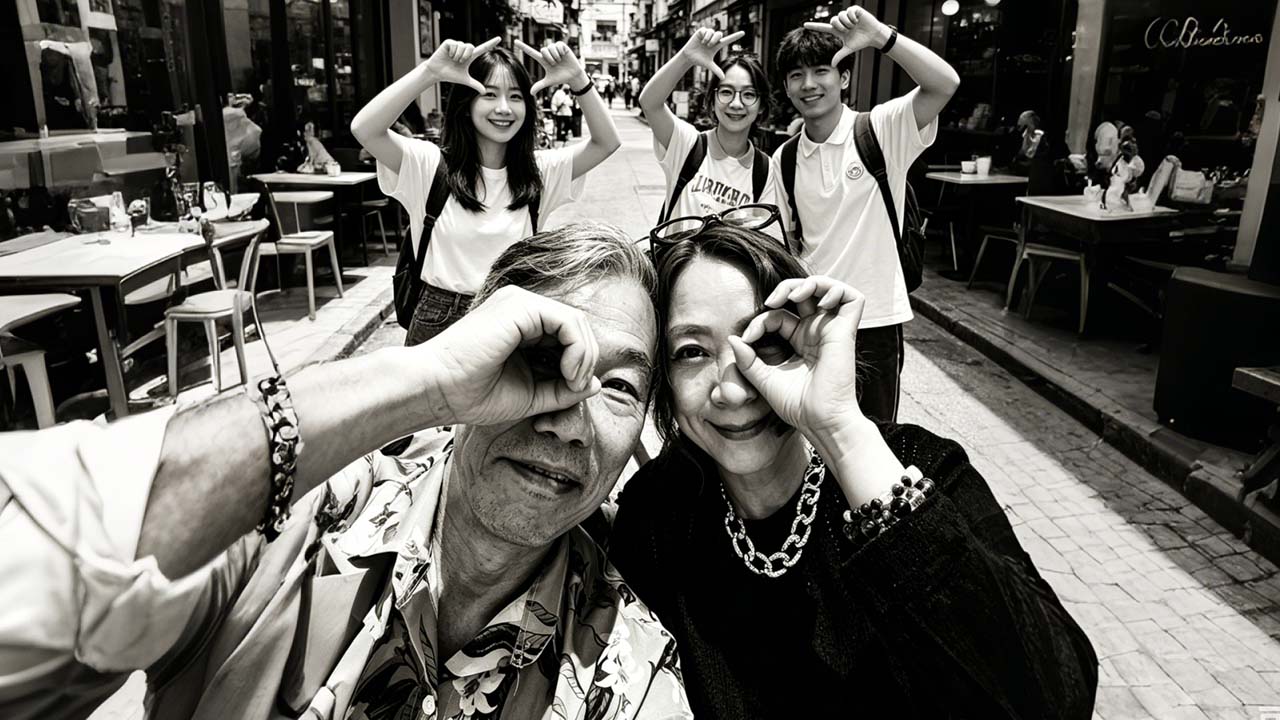
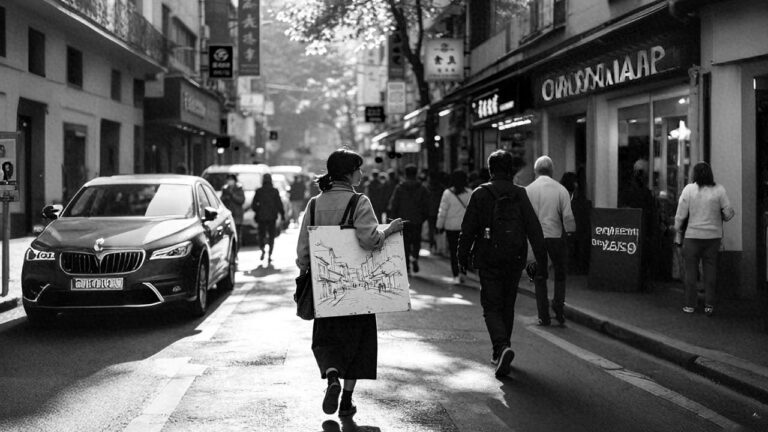
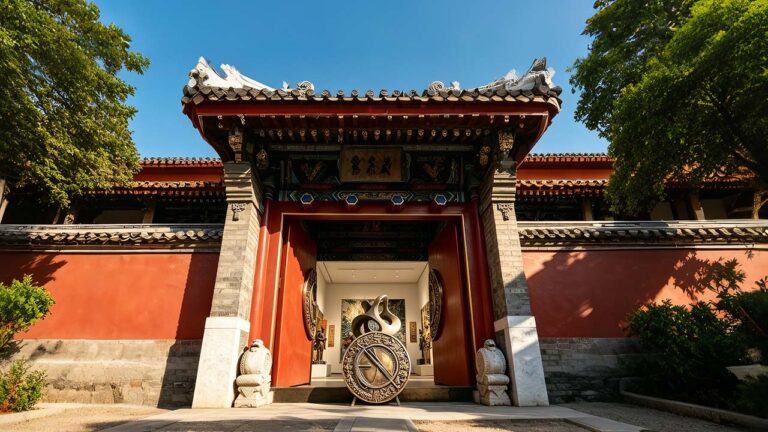
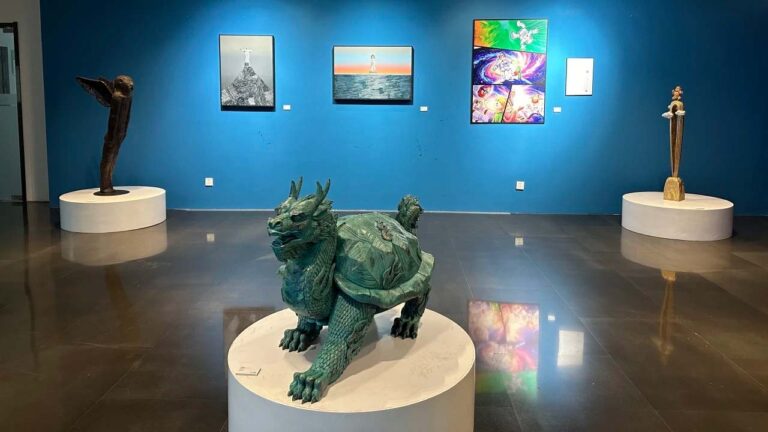
On this day, they met at the café to discuss a new project: a community art space in Beijing. It would be a place to inspire children who had never touched art before, letting them engage with the world and feel the beat of life through their own hands. As they held up their familiar hand shape, the café surroundings faded away. In their minds, they saw walls covered with children’s drawings of the Forbidden City and the Great Wall, kids laughing and taking photos of one another, and old friends gathering to share stories of old Beijing.
A young woman sitting nearby looked over, curious. “What are you looking at?”
Kuan and Nana exchanged a smile and beckoned her over. “We’re looking at everything,” Nana replied, forming the viewfinder once more and including the young woman in her frame. “And nothing at all. Mostly, we’re looking at the future.”
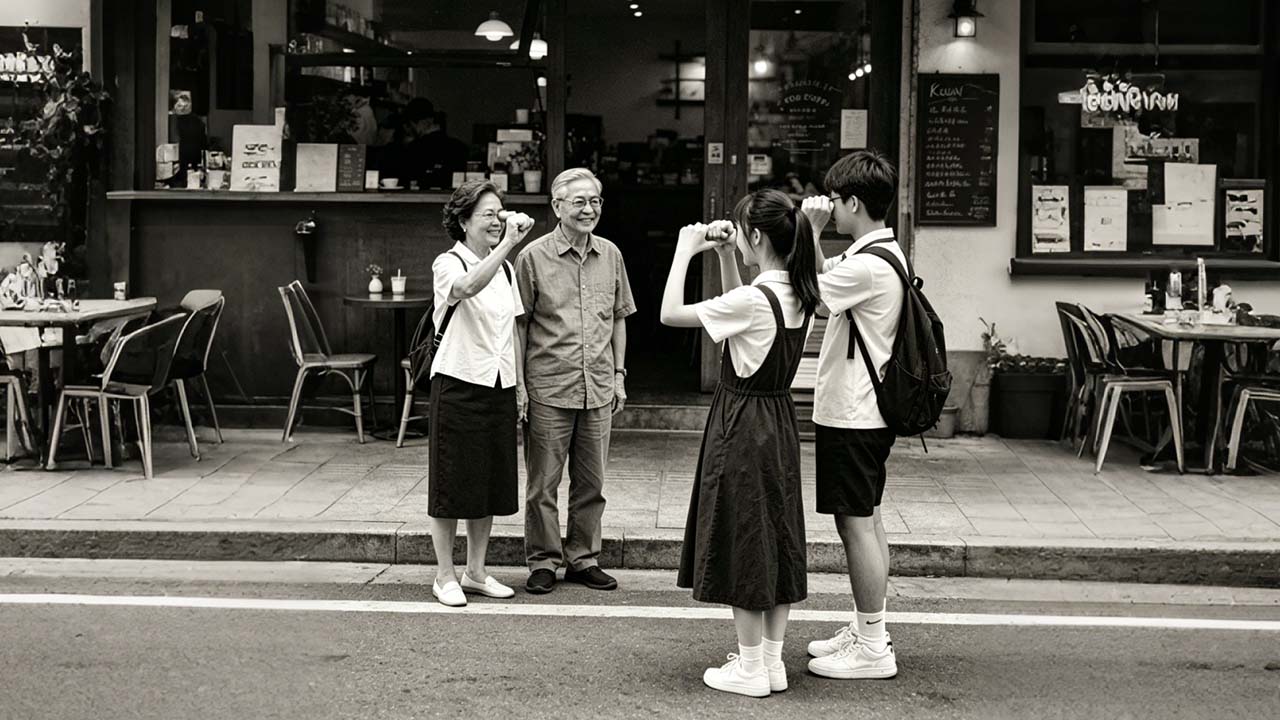
Hesitantly, the young woman copied their gesture. She giggled at first, feeling a little silly, but soon a shift came over her. She clearly pictured her own dreams: her small design studio, and a book about Beijing’s street art that she had always wanted to write. Those aspirations stood vivid and tangible right before her eyes.
By the time they left the café, the gesture had spread far and wide. Two students passing by made the same hand shape to view the street scenery. During her break, the café staff pointed her handmade “telescope” toward the sky, pretending to watch floating clouds. Guan and Nana walked out hand in hand, wearing warm smiles.
They realized the true magic of this gesture was never about looking alone, but seeing side by side. It turned lonely wishes into shared visions, and made dreams feel real in an instant.
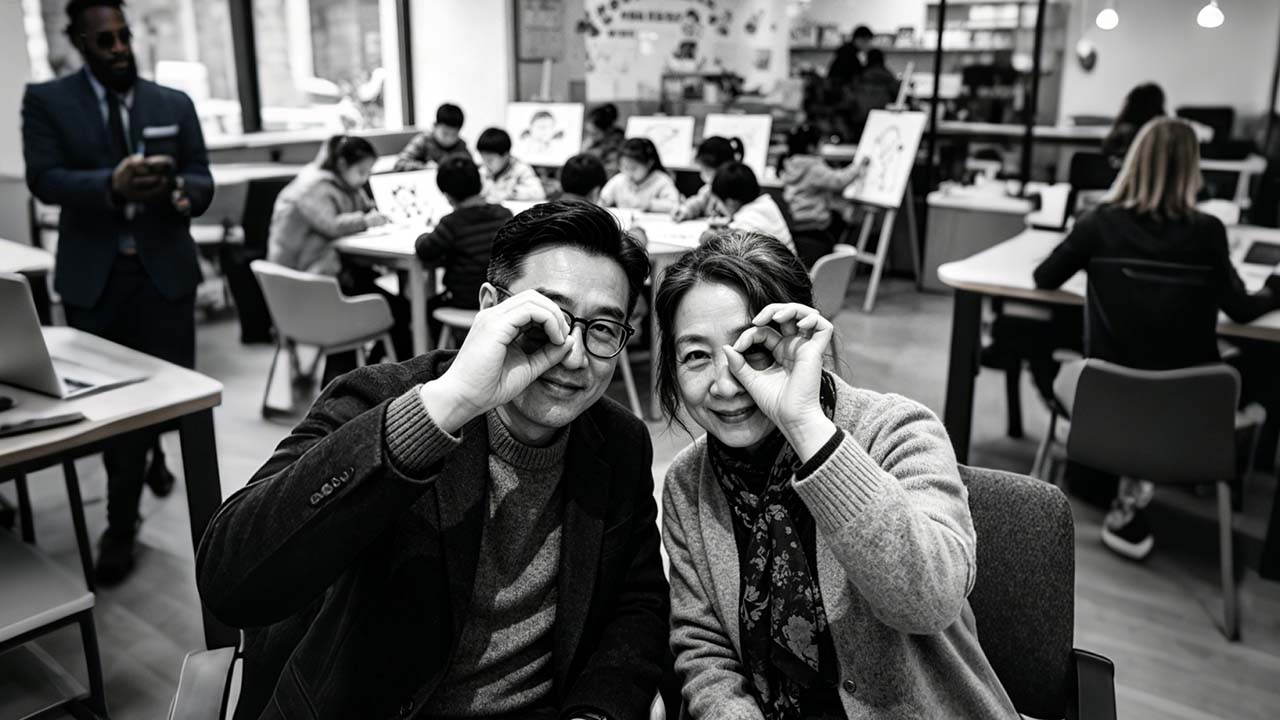
Turning the corner, Kuan cupped his hands into a viewfinder and looked toward Nana bathed in the sunset glow. She rolled her eyes playfully and raised her own hands to look back at him. In the distance, a boy riding a bike laughed and held up his hands, pretending to take a snapshot of the sky.
More and more people began to use the handmade viewfinder, and everyone’s vision stretched wider and wider.
At last, they understood: the way to see the future is to pass down dreams, one shared wish and one pair of hands at a time.
(LKW original based on true Story)