In the summer, the once lush fields of El Pine Valley were ravaged by sudden, torrential rains, followed by a relentless drought. The small town, once known for its hardworking and self-sufficient farmers, found itself facing a double-edged crisis, realizing that the familiar world they knew was slowly changing.
As the dry spell persisted, residents gathered in the old community hall, voicing their concerns and blaming each other. Among them was Marianne, a painter and muralist who had filled the town with childhood memories through her art. Looking at the parched fields, she saw not despair, but a spark of inspiration.
“If we can’t change the weather,” she said softly, “perhaps we can change the way people see things.”
Her words ignited a flame. Marianne was part of the “RuralMix,” an art collective comprised of artists, musicians, and scientists who believed in using creativity as a tool to reveal a sustainable future for the Anthropocene. Their mission was clear: to demonstrate art as a form of public service, showing that the Earth is not just a backdrop for human life, but a partner in collaboration.
1. The Project is Born
Marianne had already transformed the town’s dilapidated walls into murals celebrating local history. Tom was a digital artist with a global perspective and coding skills. Sarah was a sculptor with expertise in ecological science. Leo was a folk musician who believed in the power of music to touch souls. And Amir was a graduate student in climate science, providing the group with a scientific foundation.
The five of them decided to call their next exhibition “Rooted in Place: The Earth in Our Hands.” They envisioned it as a combination of art exhibition and public service declaration. They called themselves “Rural Mix,” because they believed that the fusion of traditional rural values with contemporary creativity was the most powerful force of our time.
Their first challenge was convincing the town leaders that an art exhibition could actually solve problems. Marianne presented a simple sketch of the Earth, drawn in a childlike style.
“We’re here discussing our concerns about the next harvest,” she said. “But if we can offer people a new perspective on the environment, we can inspire action.”
The town council, though skeptical, agreed to give Rural Mix a chance to showcase their work in the town square.
2. Art as Persuasion
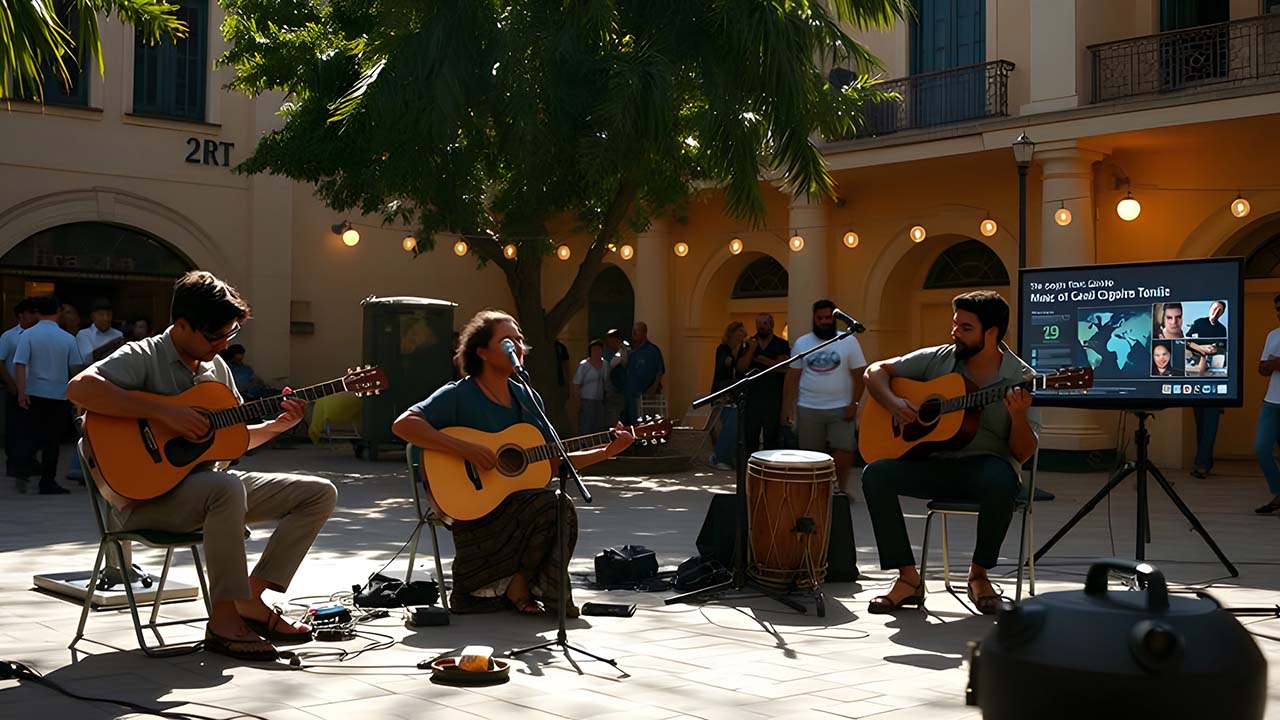
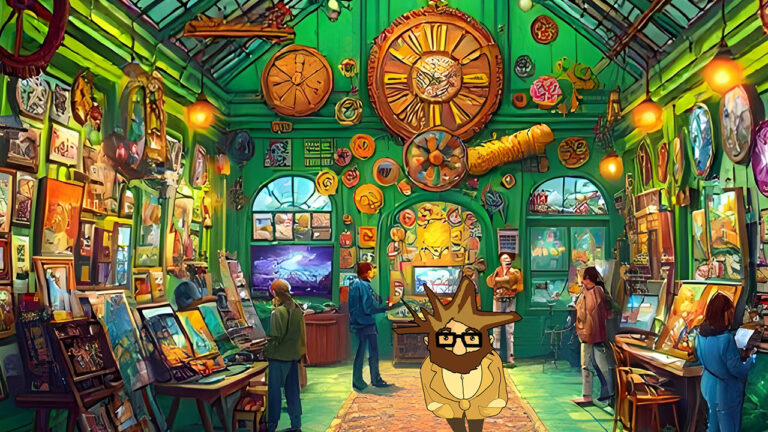
The exhibition lasted for a week, with daily events transforming the square into a vibrant gathering place.
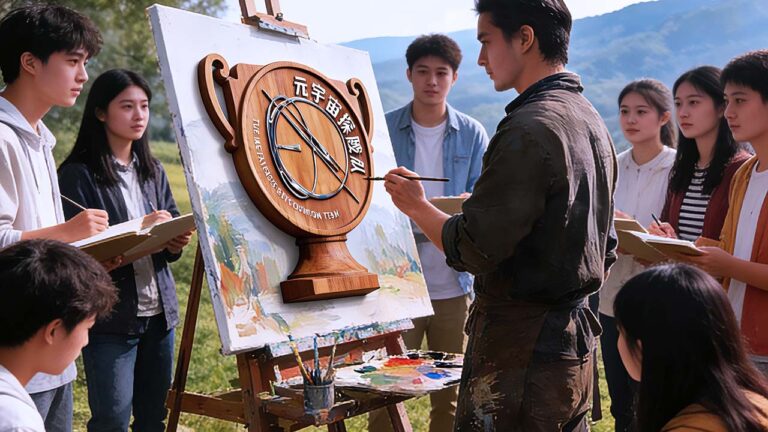
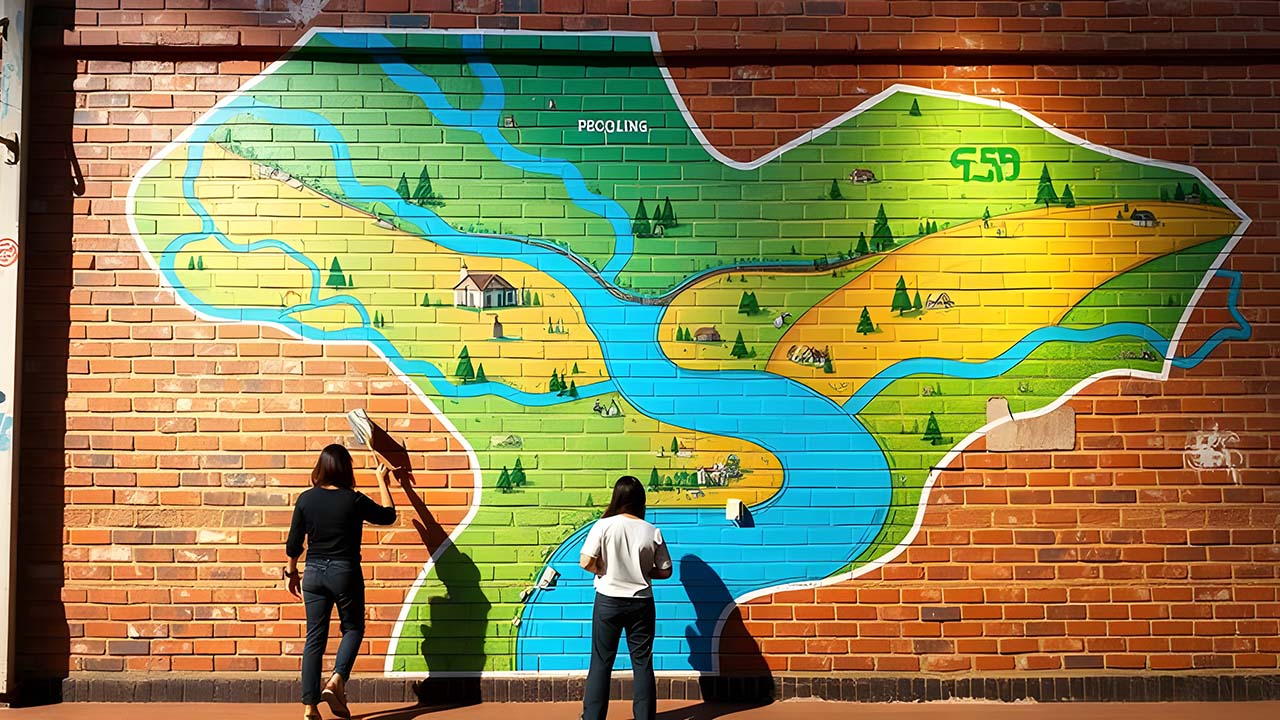
- Day 1: Memory Mural Marianne and Sarah collaborated on a large mural on a brick wall, using recycled paints. The mural depicted a map of the valley, with its rivers, fields, and houses rendered in shades of blue and green, forming a clear network of waterways, reminding viewers that water is the lifeblood of the land. As the paint dried, the mural seemed to breathe new life into the faded surroundings.
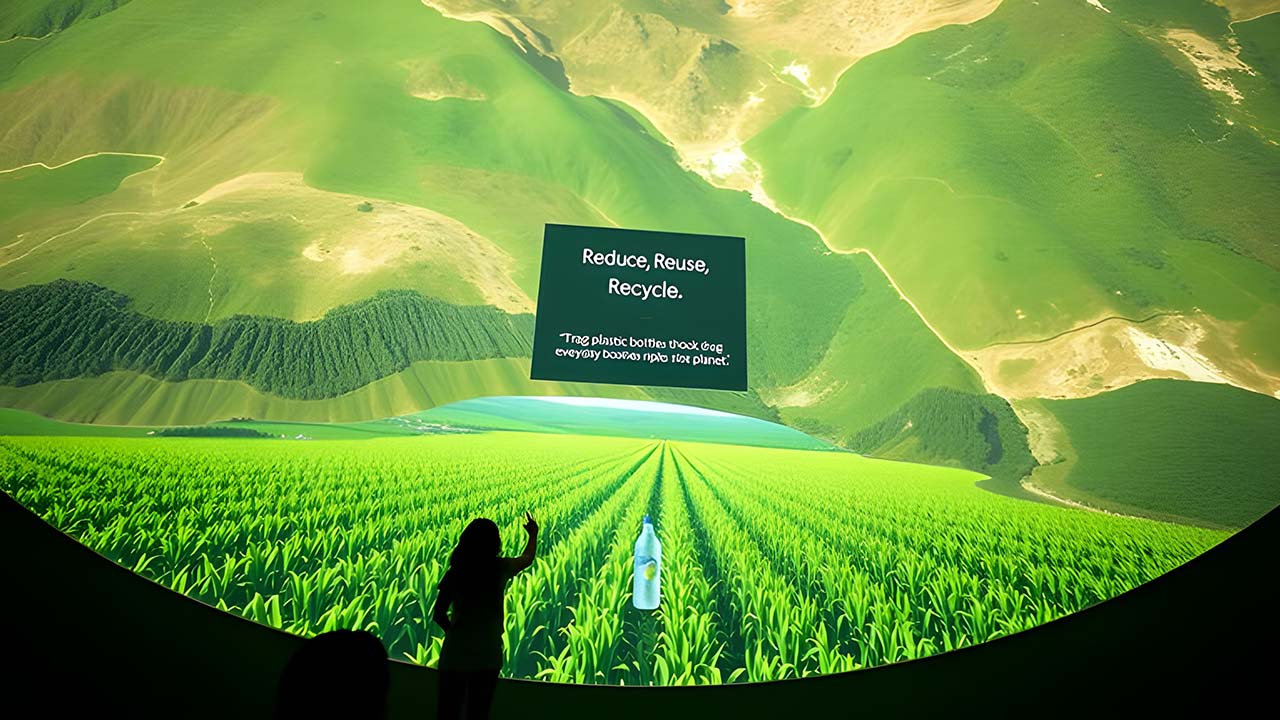
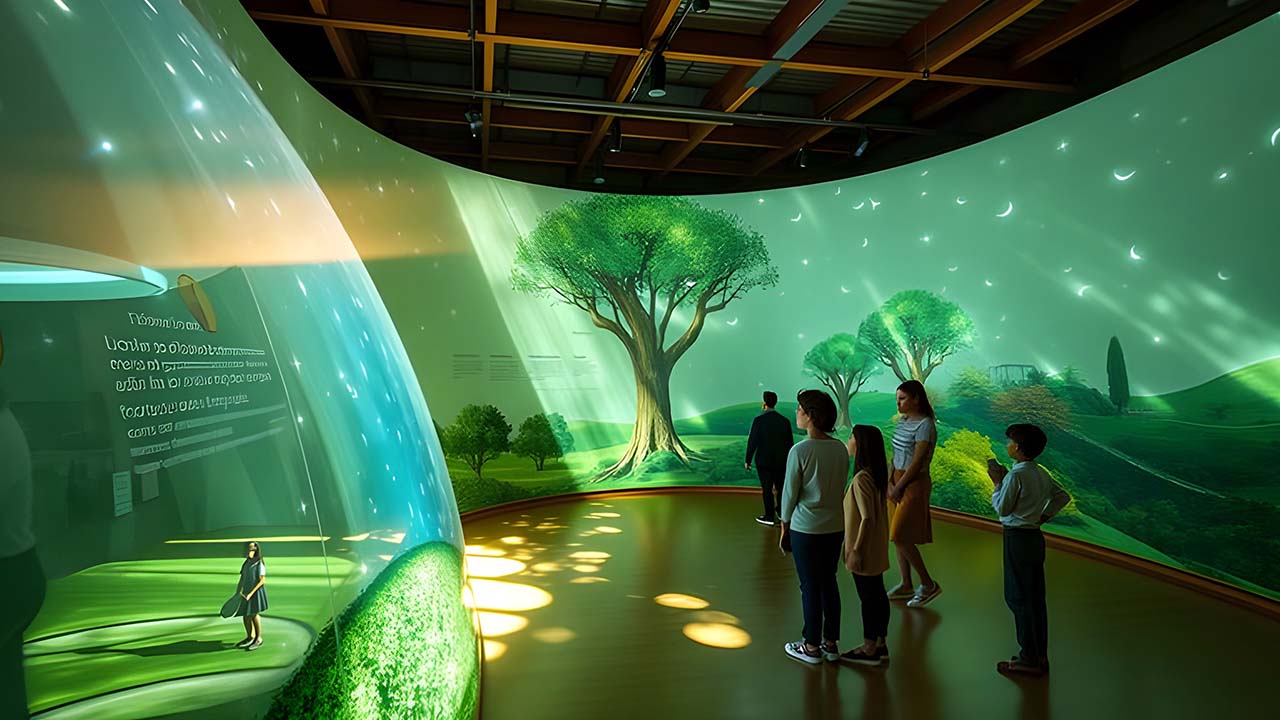
- Day 2: Interactive Dome Tom set up a digital dome, projecting satellite images of the valley. People walked beneath the dome, and the images showed the decline in green cover over the past decade. A message flashed on the screen: “Reduce, Reuse, Recycle.” When children touched the dome, a three-dimensional cornfield slowly grew, and they were guided to drag virtual plastic bottles into a recycling bin. The game was simple, but it left a lasting impression.
- Day 3: Sounds of the Soil Leo and Amir performed in the square, using percussion instruments made from local scrap wood and metal to create a rhythmic soundtrack that evoked the sounds of the earth. The music gradually built to a hopeful crescendo. Simultaneously, a screen displayed real-time data on the town’s carbon footprint. The music and data intertwined, creating a “living public service demonstration” that told a story of consumption and possibility.
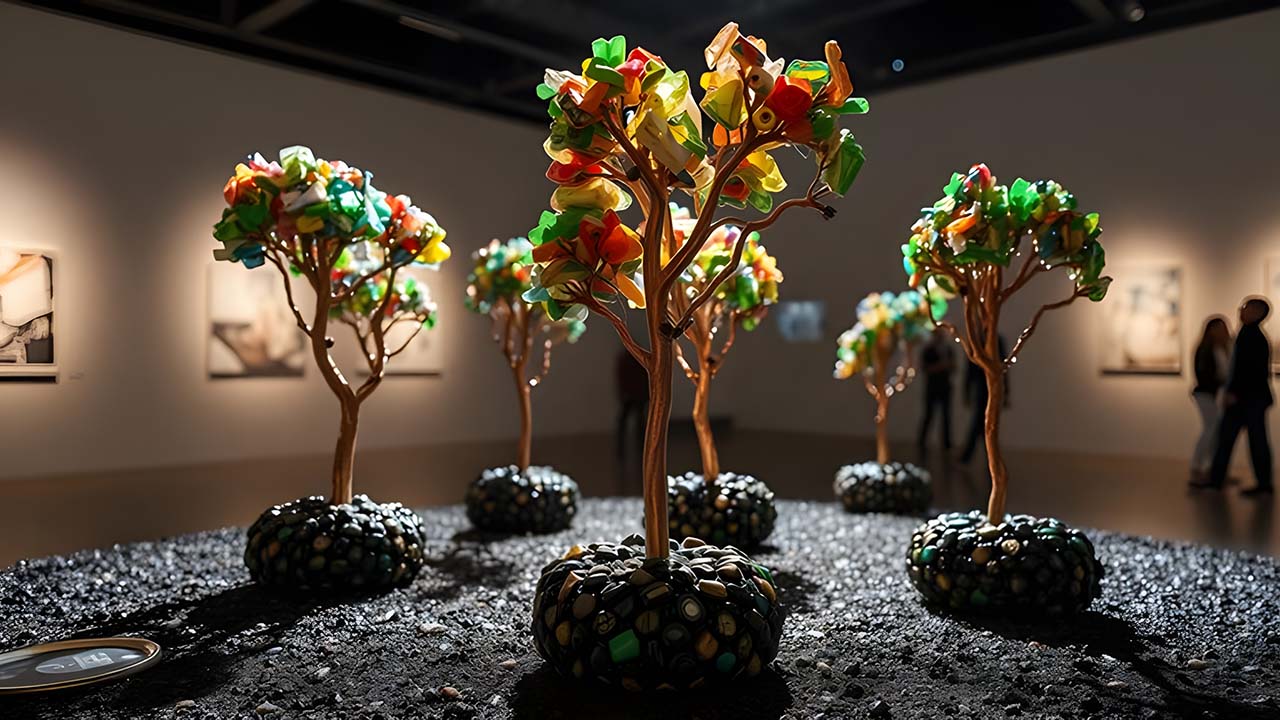
- Day 4: Zero-Waste Sculptures Sarah created a series of small tree sculptures from discarded plastic and metal. The smooth, tactile surfaces of the sculptures invited people to touch them. At the base of each sculpture, a QR code linked to a video featuring local farmers discussing regenerative agriculture. The videos ended with a promise: “We will plant seeds in our own gardens.”
- Day 5: Sustainable Parade On the final day, residents participated in a “Sustainable Parade,” carrying handmade signs made from biodegradable paper. Each sign displayed a personal commitment: “I will compost at home,” “I will use public transportation,” “I will support local farmers.” The parade culminated in a potluck feast featuring locally sourced ingredients, and every dish was completely consumed.
3. From Announcement to Action
A month after the exhibition, the library established a “Sustainability Wall,” where residents could post updates on their progress. Within six months, the town’s waste audit showed a 30% reduction in single-use plastics. The town council passed a “Green Initiative,” including solar panels for public buildings and a community garden that used drip irrigation. Most importantly, a new generation of children formed a “Seed Keepers” club, learning how to plant and care for local orchards.
The Rural Mix artists continued to make an impact, extending their reach beyond the valley. A local news program interviewed them about the exhibition, and a national environmental magazine published a feature article. The project received funding from the National Endowment for the Arts, allowing them to bring the exhibition to neighboring towns.
4. The Philosophy Behind the Canvas
At the heart of Rural Mix’s philosophy was the belief that art could be a powerful form of public service, not only conveying information but also inspiring action. In the face of the challenges of the Anthropocene, it was not enough to simply talk about change; it was necessary to actively participate in creating a better future. The artists understood that power came with responsibility, which is why they transformed every brushstroke, every beat, and every projection into a call to action.
Their murals, such as “We Are the Earth’s Brushstrokes,” reminded people that everyone had a role to play in shaping the future. Each piece was created using recycled materials and local labor, making the exhibition itself a model of sustainability.
5. Legacy and the Future
Years later, new artists continued to gather in Pine Valley, using even more advanced tools. Their annual “Eco-Art Festival” featured digital sculpture parks, solar-powered sound systems, and augmented reality ecological explorations, showcasing the health of the forest. The original Rural Mix exhibition remained on display in the community center, its colors softened by time, a testament to the power of creativity and responsibility.
When a blizzard threatened the newly planted orchards again after 5 year later, the town was prepared. They had a community of people who had learned to see the Earth as a partner, equipped with the knowledge, infrastructure, and courage to act. As Marianne had said, “We are simply revealing the canvas of the valley’s wounds. When awareness grows, the wounds can heal!” The Rural Mix had used art to write a “promise for the future” onto the landscape, allowing the voice of the valley to be heard.
In this place, art and ecology walked hand in hand, proving that when creativity is directed toward the core of the Earth’s challenges, it can change the trajectory of human destiny.