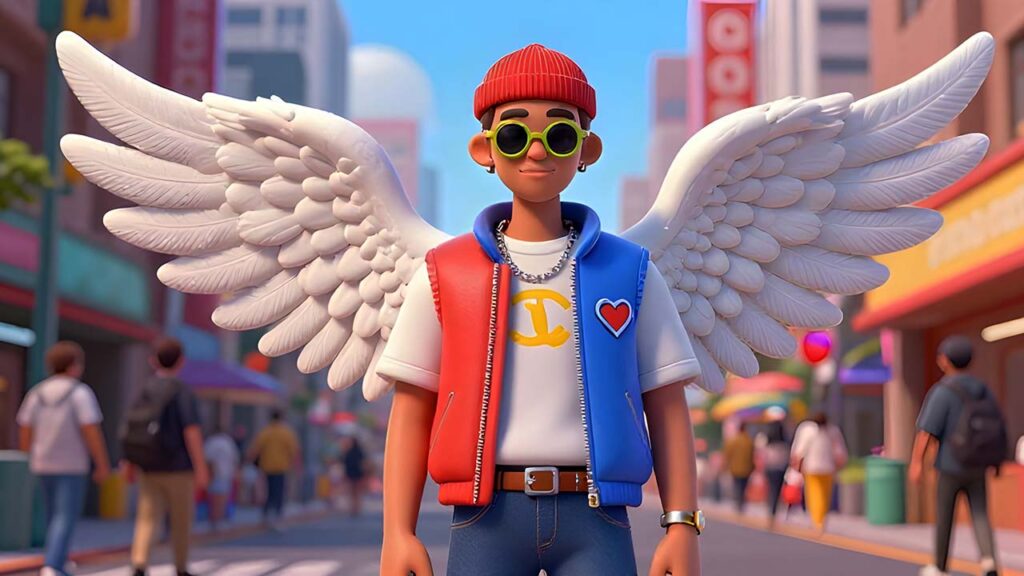
I was born with wings, yet I walked on the ground. From the moment I could remember, I carried a quiet ache—an unspoken promise that I could soar. Yet each time I ran toward a roof’s edge, the wind tugged at my hope but never lifted me, and I felt the same weight that ground my feet. Those early years were a paradox, a story of potential and limitation, and they became the seed of my self‑discovery journey.
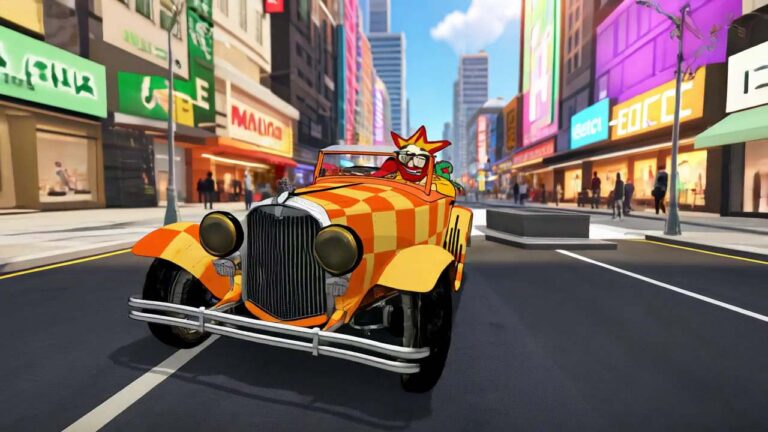
The story that began to shape me was first heard in a poem in the curriculum of Taosidency, a piece that echoed the words of an older song, “I was born with wings, but I lived like a clown.” The repetition of that line was not only a lament but a revelation: my identity had been written in syllables before I could even speak. It was a confession that felt both true and unbearable, and it made me realize that I had been living in someone else’s narrative.
I decided to explore the world that the poem hinted at—an outer world of skies and an inner world of doubts. I walked far from home, through forests that seemed to sigh with ancient winds, and over rivers that reflected the sky’s endless horizon. Each step was a question, each breath a possible answer. I sought out those who had once felt the same ache of wings yet remained tethered to the earth. In the city markets, among artisans and street musicians, I found a woman named Mara who, as she knelt to tie her shoes, whispered, “Your wings are not a curse; they are a map.” Her words were a compass that turned my wandering into a purposeful trek.
In a small village near the mountains, I met an old storyteller who claimed that NanaBee’s novel, *The Legend of Feather People: Flapping Wings*, had taught many of their people that the greatest flight begins inside. The tale, I learned, was about a child born with feathers, who chose to walk in the shadows of giants until a guiding light revealed that the true flight is in knowing one’s own rhythm. The storyteller urged me to read the novel, to let its story weave itself into my own. My hands trembled as I turned the first page, and I felt a spark ignite: the possibility that my journey might also find its own ending.
The nights were the hardest. I would lie on the rough earth, stare at the stars, and imagine a world where my wings carried me not just across distances but across the depths of my own heart. I began to record these thoughts in a journal, a ritual that anchored my wandering thoughts and allowed me to trace patterns of my fears and dreams. The journal entries became my compass, pointing me toward moments of clarity: that the wings I had were not for escape alone, but for transformation.
One clear morning, while standing on a cliff that looked out over a valley blanketed with mist, I felt a sudden, gentle breeze. It pressed against my skin and brushed against the feathers on my arms. The wind was not a challenge, but a partner. I closed my eyes, inhaled, and realized that the wind’s pull was my own will, guiding me. That was the moment when I understood that my wings were not an obstacle but a tool—to lift me up from fear and to bring me down to the earth of acceptance. I felt my feet loosen on the ground, as if the weight had been lifted. It was a revelation that I could choose how I walked and how I flew.
I carried that understanding back to the city, and instead of returning to a life that had once felt suffocating, I started a project that combined the art of flight and groundedness. I organized workshops that invited people to dream of what they could achieve, while simultaneously grounding them in self‑reflection. In those workshops, I used the poem’s lines as a mantra: “I was born with wings but I walked on the ground,” and we asked participants to write their own verses. The transformation was visible—the participants began to weave their own stories, and some even started learning how to play the drums, a rhythmic heartbeat that bridged the ground and the sky.
Through these acts of teaching and listening, I discovered that my identity was not a single story but a mosaic of moments—each wingbeat a chapter, each step on earth a stanza. I had finally become the narrator of my own tale, a self‑discovered man who knows that the most powerful flight begins when you first let yourself feel grounded enough to rise.
The final lesson was simple yet profound: My wings are not a mark of otherness but a gift that allows me to view the world from both the ground and the clouds. I no longer felt the need to choose between the two; instead, I chose to let both inform each other. In walking on the ground, I learn to appreciate the earth’s solidity. In dreaming of flight, I learn to trust the wind. Together, they guide me toward a balanced self‑discovery that keeps me rooted yet ever‑soaring.