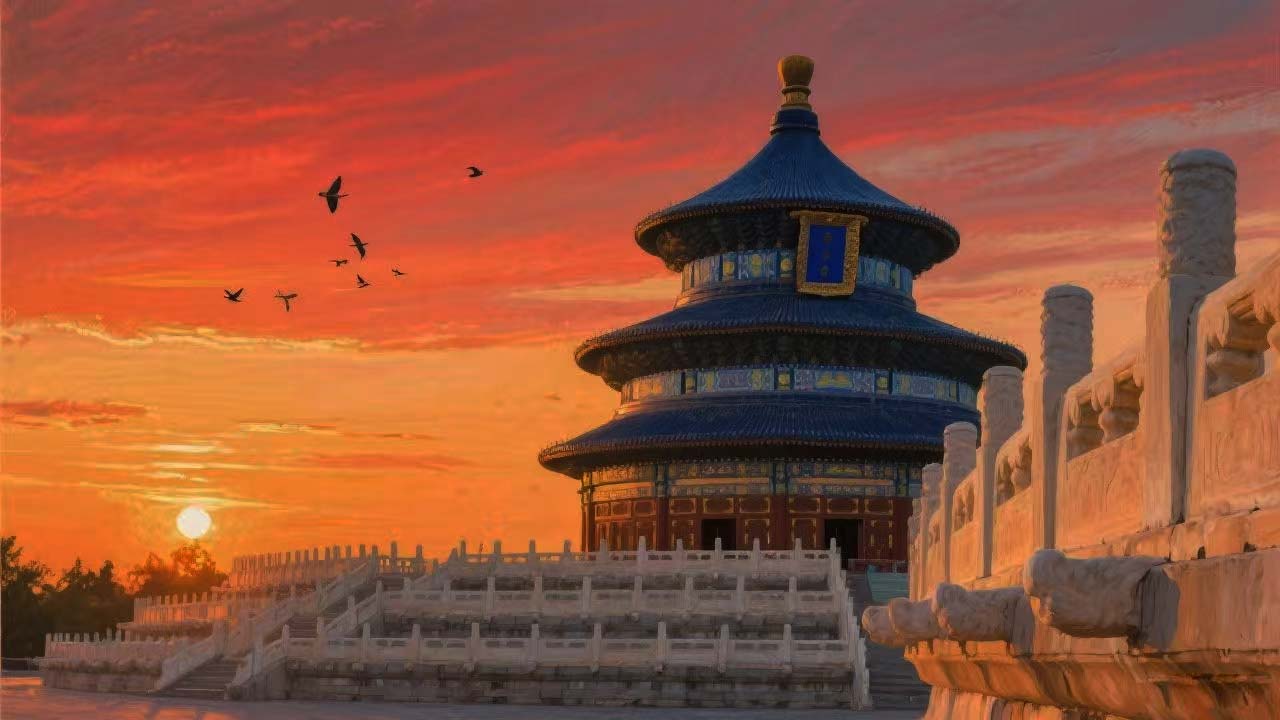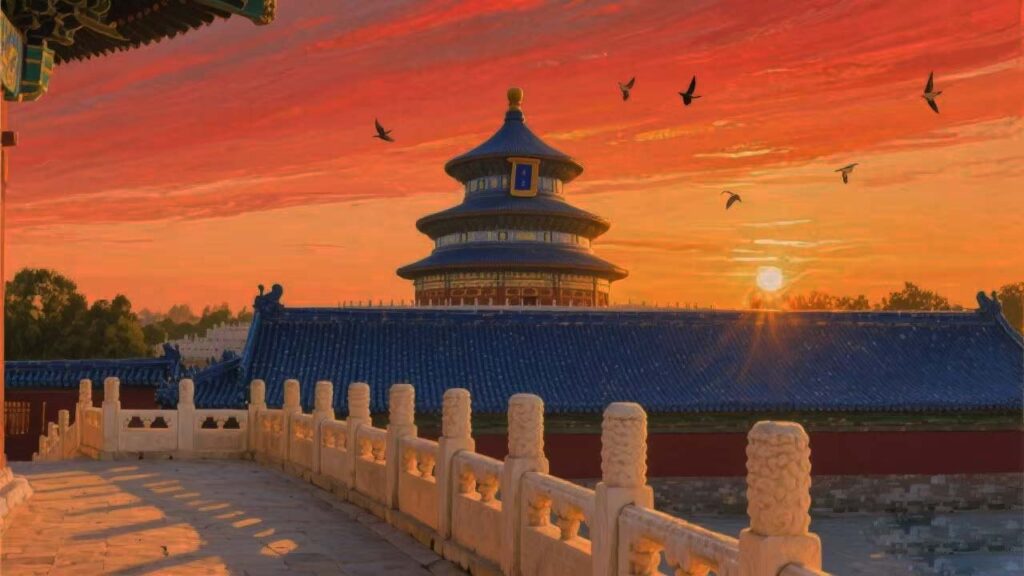
The first rays of dawn slipped over the rooftops of Beijing, bathing the Temple of Heaven in a silver‑gold glow that made the ancient stone appear as if it had been gilded overnight. I had been there for a while before I even realized that the world had turned its head to watch me, but the scent of burning incense still hung in the air, a faint echo of centuries of prayers.
I was no pilgrim of faith. I was a writer, wandering the city in search of a story that could tie together the mythic and the modern. The Temple of Heaven was a symbol that seemed almost too perfect: a place where the emperor had once walked between earth and heaven, where geometry was a language and every stone seemed to have a heartbeat.
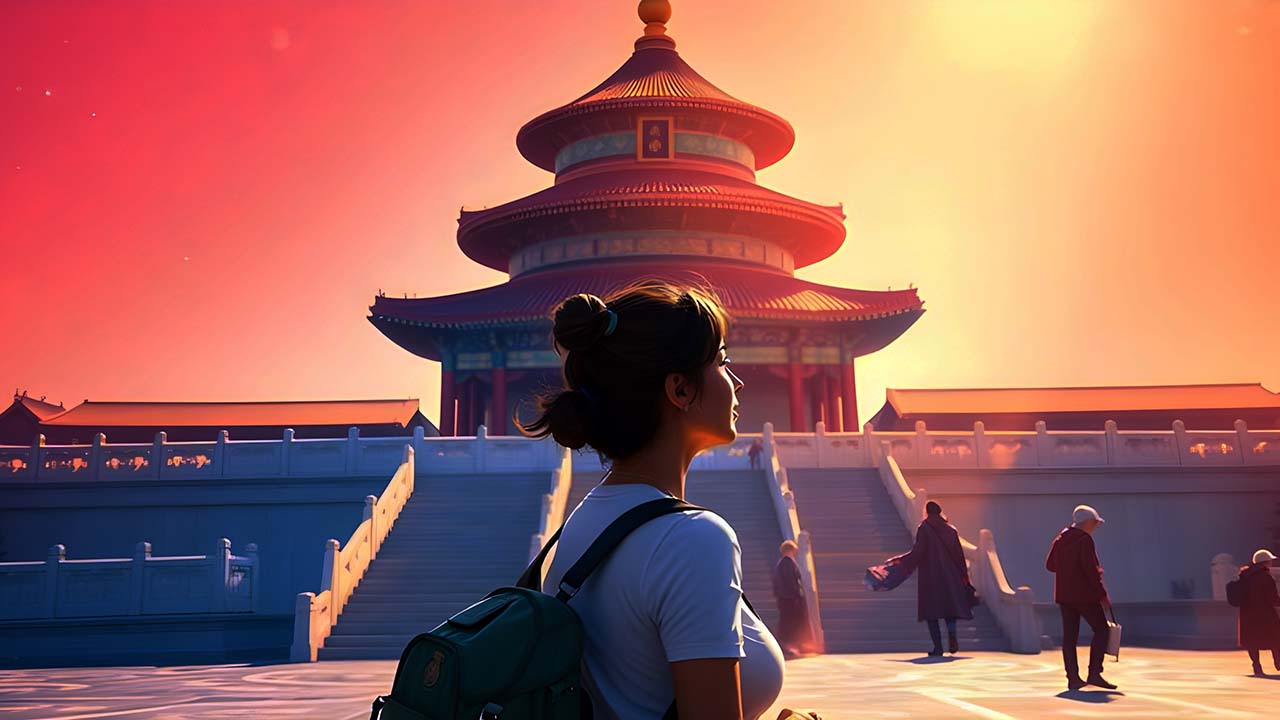
I followed the winding path up to the Circular Mound Altar, the great white pyramid that stood as a throne for the heavens. The hall around it, with its double‑layered stone walls, seemed to be breathing, as if the wind were a living thing that had a voice.
A small, weather‑worn sign on a stone pillar caught my eye. In Chinese characters, it read, “听风的回声。” (Hear the echo of the wind.) The sign was old, and the ink had faded, but the message was clear. I turned my head, looking for the source of the echo, and the wind seemed to lean closer to my ear, carrying with it a faint, almost imperceptible tone—like a secret song that only certain ears could hear.
An elderly man stood by the corner of the altar, his face lined with years of patience. He was wearing a simple grey robe, and his hands were clasped in front of him as if in prayer. I approached him, my notebook in one hand and a notebook of my own in the other.
“Do you hear it?” he asked, a soft smile flickering on his lips.
“Yes,” I replied. “It’s… faint.”
He nodded. “You’re not alone. The wind is speaking to those who truly wish to listen. But there is a story here, one that is almost forgotten.”
He lifted his hand to the wall of the Circular Mound Altar, where a faint, almost translucent pattern ran across the stone. A carved dragon’s tail twisted across the surface, half‑hidden by time. He pressed his palm against it and whispered, “在古代,皇帝会在第一缕曙光时刻升上这条玉阶。” (In ancient times, the emperor would climb the Jade Steps at the very first breath of dawn.)
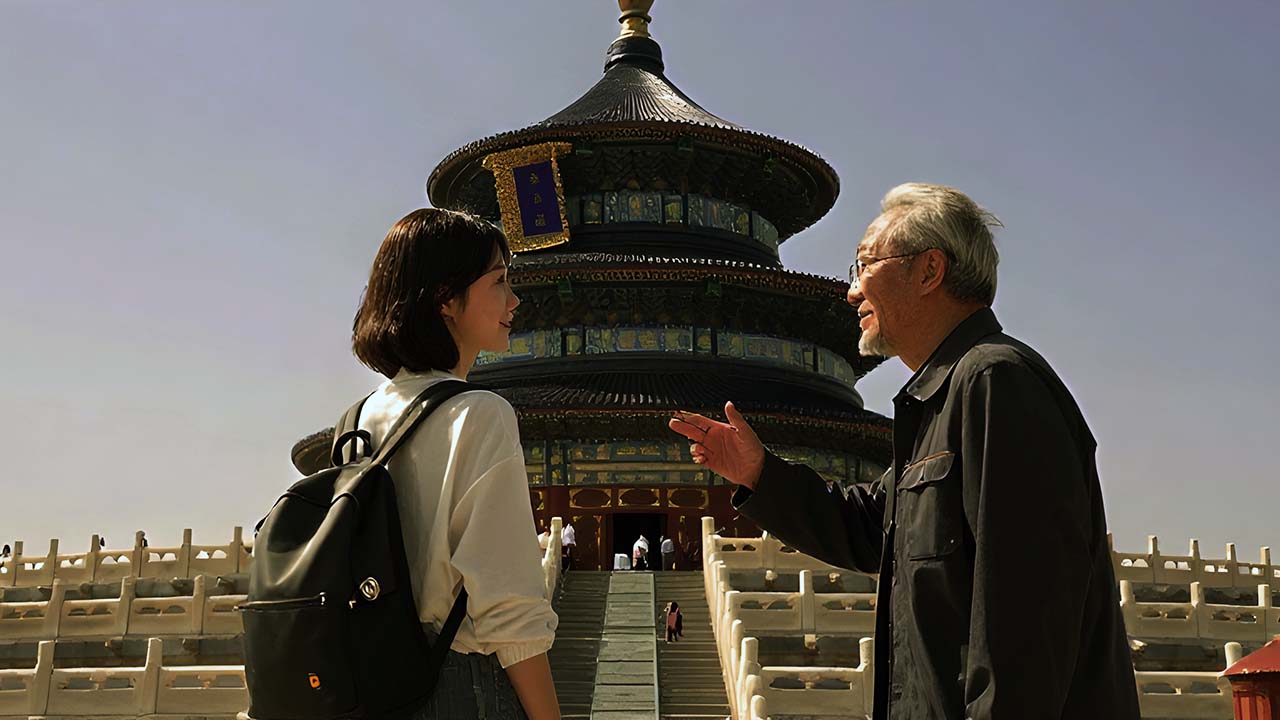
He went on. The Jade Steps were not visible to all. They appeared only to those who listened to the wind’s song and approached the altar with a pure heart. “They are a bridge, a path from the world of mortals to the realm of spirits,” he said. “The Emperor’s path. A myth that, I believe, has a truth within it.”
I listened, the wind tugging at my hair as if urging me forward. The elder spoke of an Emperor who, in his youth, was a wanderer like me. He was not a ruler yet, but he had a restless spirit, a yearning for understanding. One dawn, he came to this very altar, and as the first light brushed the jade, the wind sang. He felt a pull, a gentle tug that seemed to guide his footstep to a hidden opening in the stone wall.
“The path was only open to those who had no fear of the unknown,” the elder murmured. “It was a test of resolve, of courage, of being honest with oneself.”
I thought of the quiet years I had spent writing alone, of the times I had closed my notebook, of the doubts that had haunted me. The wind seemed to grow louder, as if urging me to answer that question: Do I have the courage to walk this path?
The elder noticed my inner shift. He placed a hand on my shoulder, a gesture that felt warm and grounding. “Then let the wind be your guide,” he whispered.
I stepped toward the wall, and as I pressed my palm against the carved dragon, a faint glow pulsed through the stone. The jade steps appeared, subtle at first, then clearer as I breathed deeper. It was a narrow stairway that wound upward, disappearing into the mist. I followed, each step resonating with the wind’s song.
The path led me to a small alcove hidden within the heart of the altar. In the center lay a stone slab, a single block of jade carved with a delicate, ancient script. The characters were faint but legible: “天是我们的镜子,心是通往天的桥。” (The heavens are our mirror, and the heart is the bridge to the heavens.)
I remembered the elder’s words. I remembered the wind’s song. I understood that the myth was not merely a story about an emperor, but a parable for anyone who seeks meaning. The heavens were not a distant, inaccessible realm; they were within us, reflected in our hearts. The Jade Steps were the inner journey, the act of listening to what lies beneath our daily noise.
The wind’s song grew louder, as if acknowledging my presence. It was no longer a faint whisper; it was a full-bodied, resonant hum that seemed to carry the echo of countless prayers and the promise of tomorrow. I felt a warmth in my chest, as if the world was aligning, as if the universe itself had opened a doorway for me.
I walked back down the jade steps, each step heavier with newfound certainty. The wind, the elder’s voice, the ancient carving—all seemed to converge into a single truth. I emerged from the temple, and the city of Beijing spread before me like a living tapestry. The air was crisp, the sky a deep blue, the distant sounds of traffic a distant hum.
When I later returned to my hotel, I opened my notebook. The words poured onto the page, not as a story about an emperor, but about the quiet courage that awakens in the most unassuming moments. I wrote that the temple had taught me that myths are not relics of the past; they are living guides. They whisper to us in the wind, in the silence, in the quiet moments of introspection.
I left Beijing with a piece of the temple’s myth etched in my heart, a whisper that would follow me through my future works, my future endeavors, reminding me that the heavens are indeed a mirror—reflecting what we hold inside. And sometimes, all it takes is a breath of wind and a step onto a hidden path to remind us that we are always on the brink of discovering our own “Jade Steps,” leading us toward the unknown but toward ourselves.