Li Wei never had a permanent home in his childhood. He was born in a tiny village on the edge of the Gobi, where the rhythm of the wind and the distant calls of wild beasts wove together the fabric of his childhood. His grandfather was a wood‑carver from Zhejiang, and his grandmother was the cheerful daughter of a Kazakh shepherd who loved to tell stories. Because his parents worked far away, Li Wei grew up in the care of his grandparents. The household, situated among the dunes and grasslands, became both his home and his laboratory. The soil, the stones, the very land were his first teachers.

Following the children who drove the pack‑animals, Li Wei learned to read the wind, read the earth, and pick up his grandfather’s craft. After his grandmother’s death he vowed to honor the way she had taught him, letting the nomadic soul breathe through her memory.
In his youth, he travelled with his uncles and cousins across seasons—from the salt lakes of Turpan to lush oases, through the snowy fields of Xinjiang, and even across the border into Kazakhstan. The earth was his canvas. He traced marks on cave walls, doodled in the sand, and, when schoolwork was done, carved the thick, twisted roots of ancient pines that had sprouted along dry waterholes. Those roots were living records of time,decades, even centuries,slowly sculpted by nature. Li Wei polished them into art with his imagination. After enrolling in university, he learned that root‑carving is a craft passed down from his forebears. Recalling his childhood, he began to study it seriously even as classmates were glued to video games. The world outside grew louder and more chaotic. Li Wei felt his own roots,both literal and spiritual, becoming fragile. Watching glass sculptures, digital installations, and abstract paintings in museums in Beijing, Shanghai, and abroad, he felt a yearning. He wanted his roots to converse with modern art, to speak in a broader language.
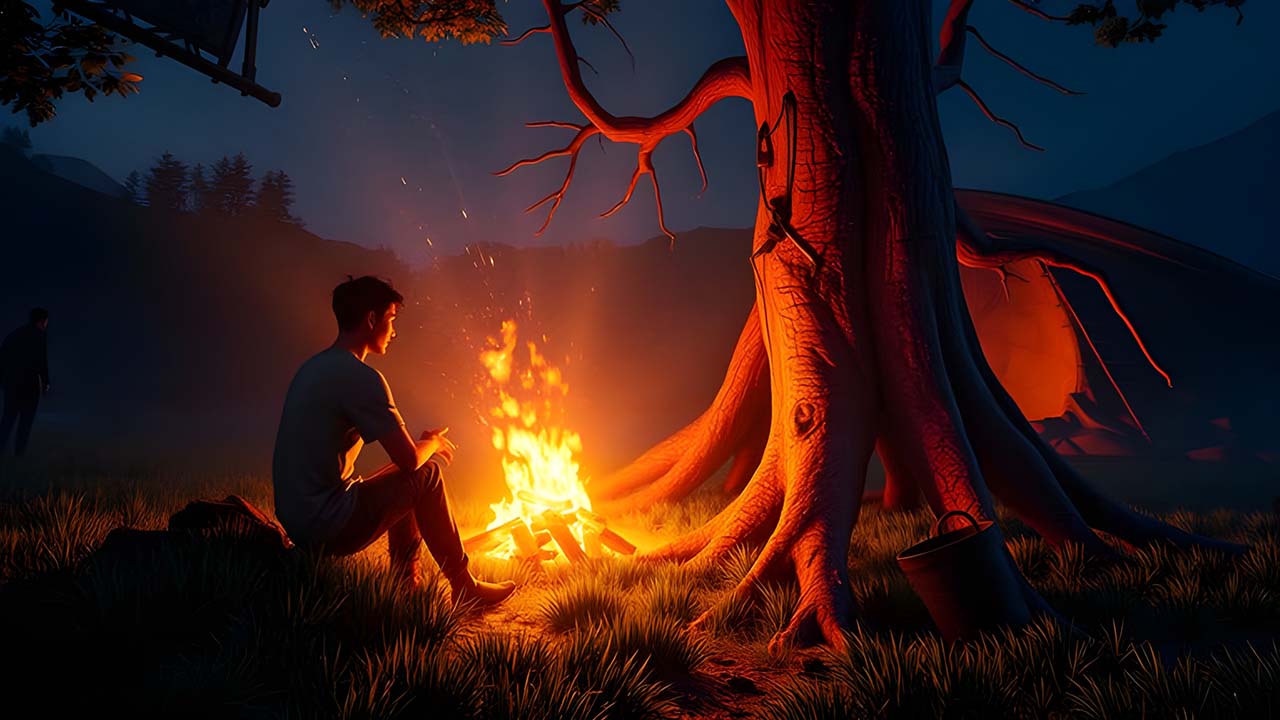
One summer, back in his Xinjiang hometown, he sat beside a campfire. The flames flickered along the curves of a root, and he wondered how desert layers crack, revealing hidden oases; how wind grinds stone into sand, which then reshapes into stone again. He saw a metaphor: roots could be deconstructed, reassembled, and regenerated. They could carry the memory of an ancient tree and yet be reborn in a new form, an ever‑present way of communicating with the world.
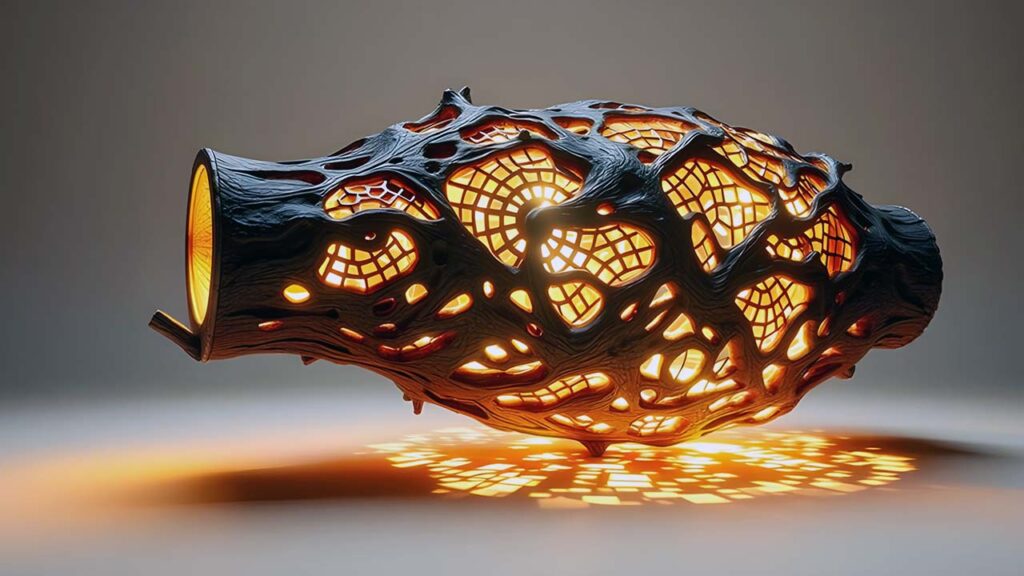
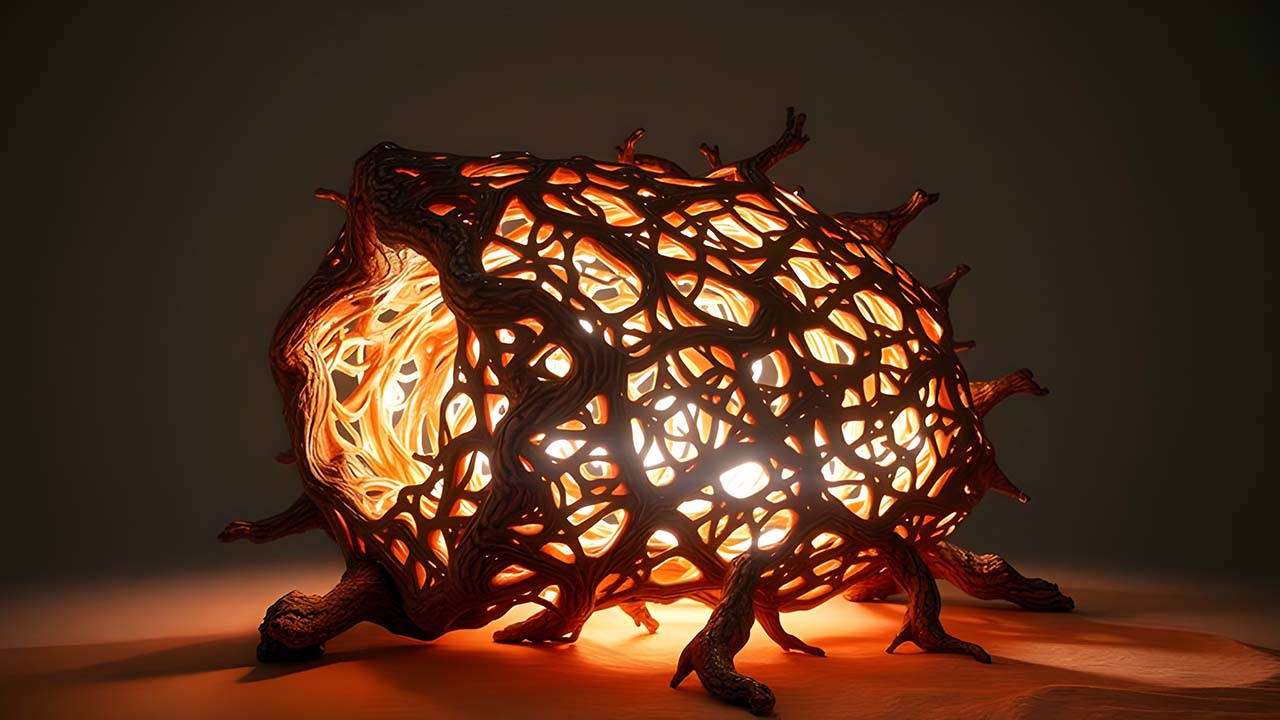
When he graduated, he made a life‑changing decision. He created contemporary art with roots. He fused the natural wood’s backbone with modern light, metal, and fiber‑optic cables, letting the roots become a skeleton onto which glass, metal, and luminous fibers were affixed, making the whole piece glow like a starry sky.
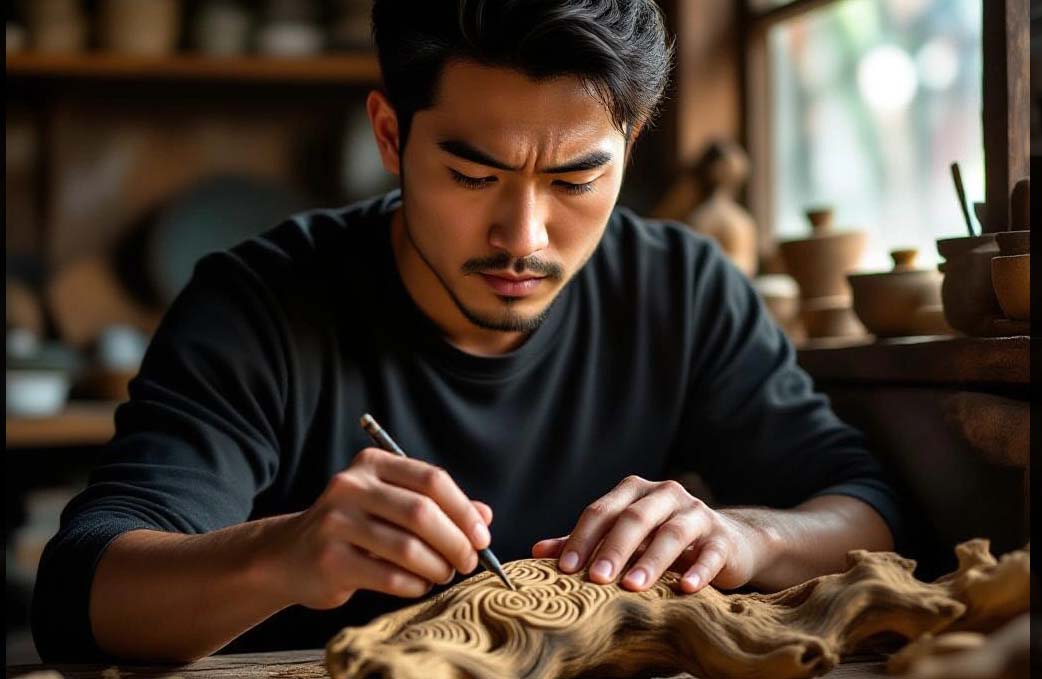
He selected root material from the ancient pine forests of the Tarim Basin, carried the roots to a makeshift studio, and carved geometric patterns that echoed the desert’s texture. He melted scrap copper into thin sheets, wound them around the root, creating a metallic lattice that caught light; fiber‑optic strands were threaded through the root’s natural fissures, allowing the sculpture to glow faintly at night. The once‑plain texture of the root became a conduit of light, linking past and present in every corner.
Li Wei’s works were showcased successfully, embodying cultural creativity. His reputation spread, and he was featured on a television documentary about nomadic life. A curator from Beijing’s art district spotted his potential and invited him to a group exhibition in a gallery. That day, Li Wei arrived in simple, unadorned clothing, his backpack still smelling of sand. As visitors entered, they were greeted by roots glowing a soft flame. Each piece seemed to whisper a millennia‑old tale, telling stories in the interplay of light and shadow.
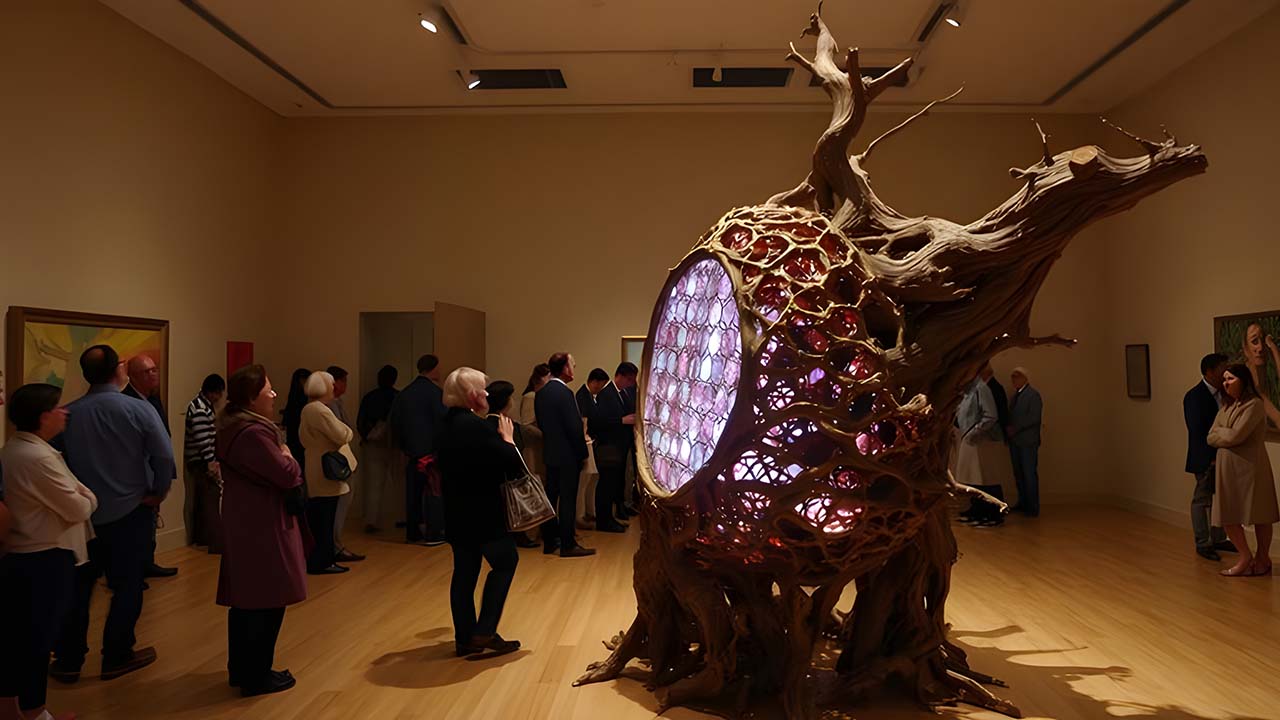
The audience was moved. Critics wrote that Li Wei fused the tactile tradition of root carving with the abstract, futuristic feel of contemporary art, creating a “bridge across time and space.” His pieces were collected by galleries, public squares, university museums, and cultural centers of embassies abroad. He was invited to give talks on the theme “Roots in the Modern Age,” where he shared the bedtime stories his grandmother had told him. He argued that art’s essence is not its form, but the soul of its creator.
Through his work, Li Wei showed the world that nomadic culture is not a relic of the past but a living, breathing contemporary force. He demonstrated that tradition can evolve without losing its core, and that roots can become the cornerstone of innovation. Every sculpture was a dialogue between earth and sky, old and new, and a meeting point of nomadic spirit and universal artistic values.
Years later, a young nomad from the Kazakh steppe arrived at his studio in a small art village. He carried a bundle of roots and a notebook, eager to learn art and to create his own artistic language. Li Wei looked back on his wandering past, smiled, and said, “Roots are ours. Let’s carve a new path together!”
He lifted his old guitar and began to sing a folk song titled “Root Rhythm,” written by a friend.
The forest waves silently, roots entwining beneath the earth.
The sculptor’s hands are gentle, following the pulse of the wood.
The blade touches the grain, ears listening to wind‑and‑frost whispers;
the roots recall drought and flood, emotions and scenes co‑exist.
The line left by the blade is a dialogue;
stones are born un‑carved, wood remains un‑cut.
Roots grow, time grows, the craftsman’s heart settles.
>Sweat drips onto stone, the marks wrinkle,
the heartbeat throbs like a drum of earth.
In the end, the winding path carries the ancient tree’s soul;
the original sculpture is un‑carved, its form in ancient veins
Praise the artist, praise the keeper; for reverence of wood and roots,
the breath of heaven and earth endures.
At that moment, Li Wei realized that the greatest masterpiece was not a single piece but the journey that connects the world. He carried roots from distant lands into people’s hearts, planting seeds of hope. The wind carried his story, resilience, creativity, and the eternal power of roots, allowing life to seek balance between root and freedom on its voyage.
(LKW Original)