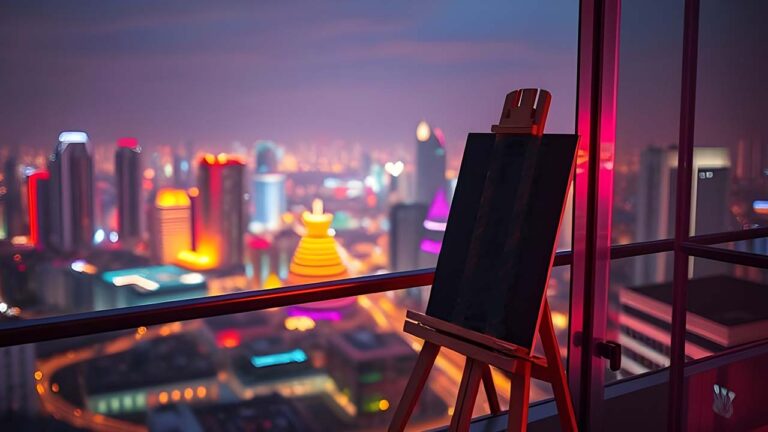
The morning sun filters through the gaps between Beijing’s high-rises, casting golden spots on the city’s glass curtain walls. On a rooftop garden hidden amid the urban bustle, five creativepreneurs from across the world sit chatting. The low hum of air conditioners mingles with the street’s hustle and bustle, mirroring the restlessness hidden beneath the era’s prosperity.
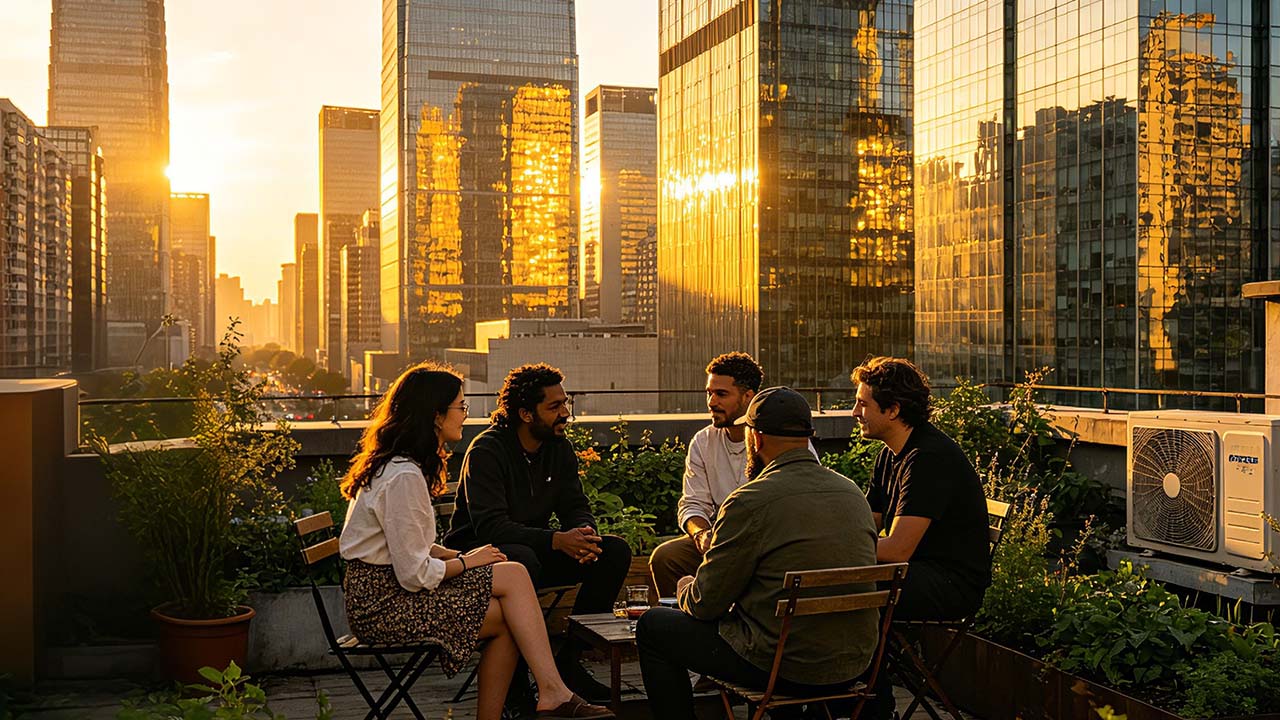
Gathered in Beijing for an international interdisciplinary art project, each of them possessed unique expertise—yet all were trapped in the same spiritual confusion. Anna, an AI ethicist from Silicon Valley, grew weary of the cold commercial principle that prioritized data above all else. Miguel, a Spanish environmental engineer, constantly questioned whether high technology could truly heal our wounded planet. Aisha, a neuroscientist from Egypt, dedicated herself to exploring the profound connection between ancient civilizations and the human neural network. Kenji, a Japanese visual design expert, insisted on infusing humanity into cold digital interfaces. Rohan, an Indian sociologist, worried that global networks were homogenizing people and eroding the unique soul of civilizations.
They devoted themselves daily to the Creative Laboratory, exchanging ideas and pursuing exploration—yet doubts lingered in their hearts. Holding her coffee, Anna asked softly, “Are we really doing something meaningful with all our efforts?” Miguel sighed helplessly, “We seem to work for invisible algorithms, powerless to change our environmental crises for real.” Staring at the rapidly expanding metropolis, Aisha lamented that modern cities were losing their warmth and human touch. Just as everyone fell into perplexity, Rohan suggested visiting a museum, hoping China’s ancient myths might clear their minds.
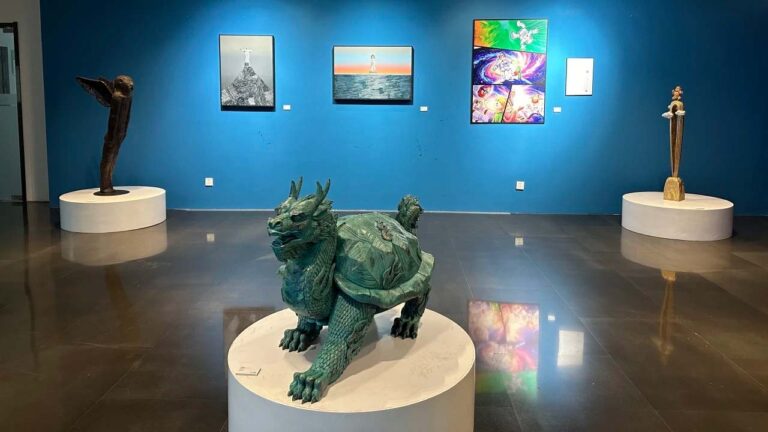
The group entered an art museum named Cookie House. Carved antique wooden doors stood quietly, and the air carried the faint scent of aged wood and ancient porcelain. Inside the hall stood a three-meter-tall jade-looked sculpture of Nüwa. Gentle and graceful, the goddess held seven colorful jade stones in her hands, standing quietly through millennia, waiting for kindred spirits.
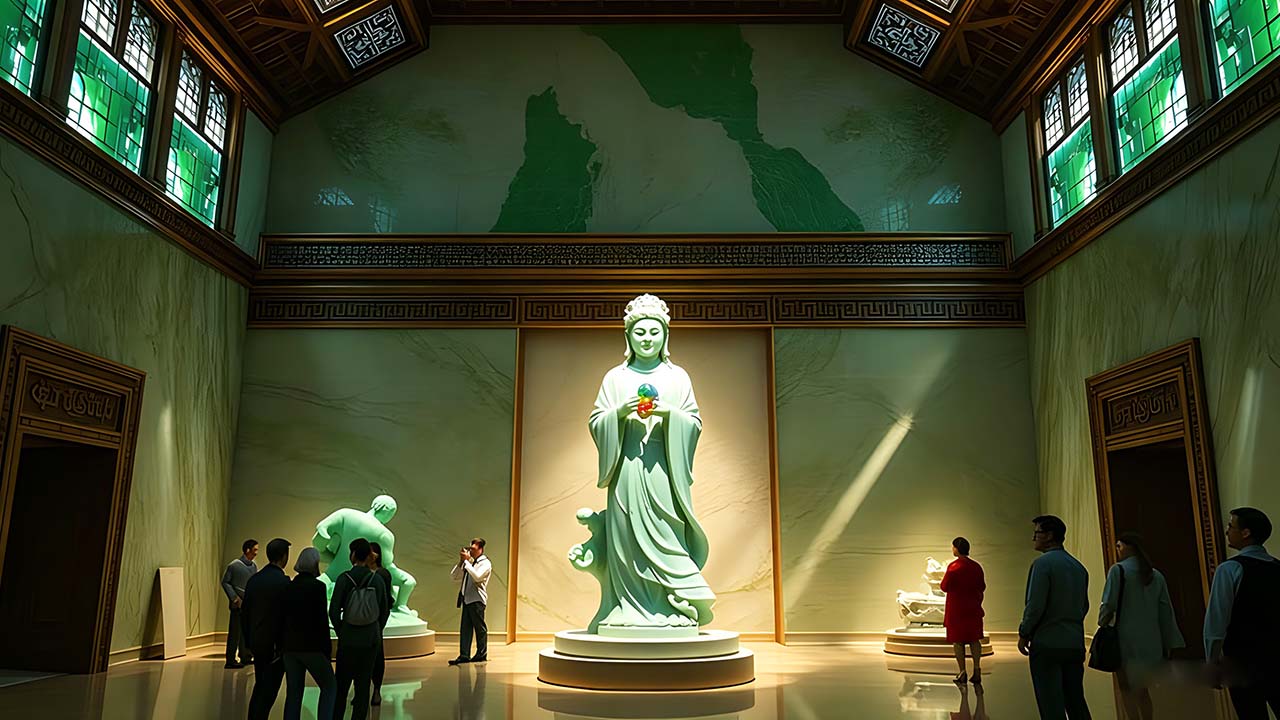
Professor Wang Louis, the museum’s guest speaker, told the timeless legend in both Chinese and English. In primordial times, the sky cracked open, throwing the world into chaos. Nüwa gathered divine stones in seven hues—red, orange, yellow, green, blue, indigo, and violet. Through untold hardships, she mended the broken firmament, restoring cosmic order and peace to all living things.
Hearing of the seven colors, Anna instantly thought of the RGB spectrum. Miguel smiled and said it was none other than the earthly rainbow, hiding profound universal wisdom. Professor Wang pointed to the jade statue and shared an enlightening revelation: “Nüwa’s seven colors are far more than mere shades. They represent seven fundamental pillars of life on Earth—air and ecology, public health, culture and humanity, cutting-edge technology, justice and morality, economic development, and natural conservation. The rifts of our modern world can only be healed by mending these seven realms to regain balance.”
His words struck them like a morning bell, awakening the confused travelers. Professor Wang then gave each of them a small jade piece corresponding to one of the seven colors. “Keep these stones,” he said. “Remember, every color bears a mission to guard our world.”
Carrying the jade tokens and new insight back to their studio, the seven-colored stones rested on their desks. Inspiration surged like a rushing river, bridging their cross-cultural minds. The five resolved to carry forward Nüwa’s ancient spirit to mend the modern world. Anna led the creation of an AI system integrating the seven major realms. Miguel started with climate modeling, using satellite data to track global microclimate changes. Aisha drew on neuroscience to analyze how environmental degradation affects human emotions. Kenji took charge of visual design, turning complex data into intuitive, humane visuals. Rohan built a cross-cultural communication platform to break geographical barriers and unite global communities.
They named their vision **Nüwa Network**. Their goal was to build an open-source, AI-driven global platform that collects real-time environmental, social, and cultural data, maps them onto a seven-colored celestial canvas, and delivers actionable insights for humanity.
The team laid out their blueprint step by step. They assigned each color a vital meaning: red for climate change, orange for public health, yellow for human culture, green for technological innovation, blue for social justice, indigo for economic vitality, and violet for ecological protection. Using satellite imagery, IoT sensors, and community feedback, they wove a real-time living map of the planet.
Kenji crafted a brilliant design idea: transforming an empty rooftop into a black simulated sky fitted with programmable LED lights that shimmered like a rainbow. Every kind act on the platform awakened its corresponding colored glow. Planting a tree lit up the violet ecological radiance; updating health data brightened the orange wellness glow. AI analyzed real-time data to offer precise governance and lifestyle suggestions.
Aisha developed an emotional analysis module to capture public sentiment and people’s well-being trends. Rohan embedded cross-cultural discussion zones, allowing people of all civilizations to collaborate and create together. Miguel strictly safeguarded data accuracy, while Anna established ethical guidelines and privacy protection for the AI. Each fulfilled their role with one heart and one mind. Months later, the prototype of Nüwa Network was perfectly completed in a loft studio.
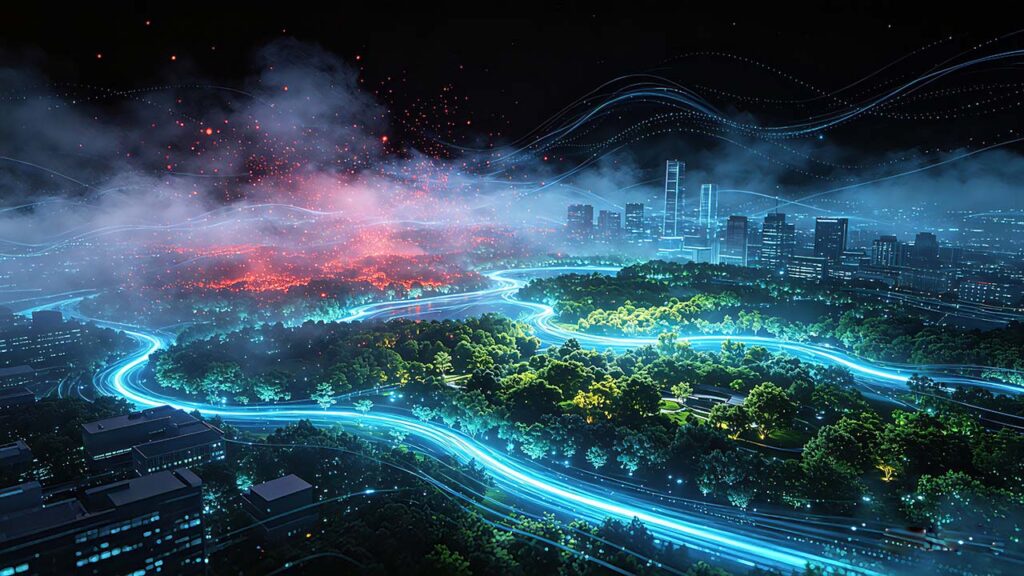
Light flowed and data swirled across the dark LED sky. Red lights flickered constantly over smog-stricken regions, while soft indigo glowed steadily in flourishing green communities. The city’s pulse and nature’s breath were all embodied in this digital firmament.
At an investment showcase, business leaders were stunned by the forward-thinking concept. Faced with questions about data privacy and profit models, Anna answered calmly: the platform would remain open-source, sustaining itself through customized services for enterprises and governments. Its core mission was data democratization—letting everyone witness the changes of our home and take up the duty of guarding our shared sky.
Supported by funding and official approval, the project officially launched a pilot in Chengdu. Local governments, communities, and enterprises used the platform to monitor green space coverage, air quality, and cultural vitality in real time. Ordinary people felt the change firsthand: planting a tree added luster to the celestial glow; holding cultural festivals brightened the radiance of humanity. A harmonious bond formed between people, cities, and nature.
One year later, Nüwa Network crossed mountains and oceans, launching in New York, Lagos, Nairobi, Seoul, and global cities worldwide. Each region adjusted the meaning and weight of the seven colors according to its own cultural heritage and development needs, turning the sky map into an inclusive platform embracing global diversity.
At the first anniversary ceremony in Beijing, Professor Wang took the stage to speak. “Nüwa mending the sky was never only about repairing the firmament—it was about shouldering the well-being of all humanity.” On the screen, Beijing’s skyline blazed with flowing colors. The glass of CCTV Tower shimmered with the blue light of justice; water canals along Chang’an Avenue were veiled in violet ecological glow. The steel metropolis turned into a magnificent scroll of seven interwoven hues.
Holding her warm jade piece, Anna said with emotion, “We have brought an ancient myth onto the modern stage of data and technology. The sky is no longer a mere backdrop—it is the shared responsibility of all mankind.” Glancing at the climate forecast on his phone, Miguel remarked that every small kind deed leaves an everlasting mark on the era’s firmament. Aisha smiled that even amid steel and neon, people could still feel the warmth of life. Kenji stayed true to his design philosophy: technology interfaces turn everyone’s goodwill into gentle, intuitive light. Rohan concluded: this is a dialogue across civilizations. Beneath the seven-colored sky, the world is no longer isolated into lonely islands.
Five years passed, and Nüwa Network grew into a globally celebrated socio-technological legend. A student in Beijing gazed up at the night sky, imagining future fertile farmlands in the violet aura. Farmers in Lagos learned advanced irrigation techniques through the platform to harvest abundant crops. Young musicians in Nairobi shared cultural resources, forging artistic ties across continents. The seven-colored jade stone from the museum remained a beacon of inspiration, reminding the team forever: every color holds a mission, every aspiration guards the living world.
In ancient times, Nüwa mended the sky and calmed all life with seven divine stones. In modern times, people use technology as a brush and empathy as ink to heal the seven vital realms and restore global balance.

This millennium rebirth of a myth reveals an eternal truth: myths are never dusty relics of the past, but spiritual dialogues transcending time. When traditional civilization meets modern technology, it unleashes extraordinary power. As long as people stay kind and united, mending the rifts of the world with action, humanity’s sky will forever shine bright, radiant with eternal seven-colored light.